
Milos, Greece: The Greek Island I Wish I Had Spent Longer Exploring
July 15, 2026
When most travelers dream about the Greek islands, places like Santorini and Mykonos usually steal the spotlight. They are beautiful, iconic, and absolutely worth visiting. But after spending three days on Milos in early September, I found myself wishing I had given this lesser-known island far more time.
Our visit to Milos came at the end of a two-week Greek island journey that began in Athens and continued through Naxos and Santorini before reaching Milos by ferry. By the time we arrived, we had already experienced crowded caldera viewpoints, charming Cycladic villages, and some of Greece’s most famous sights. What we found in Milos was something different.
Milos felt relaxed. It felt authentic. It felt like the kind of place where the destination wasn’t a single attraction, but the island itself.
Where Is Milos?
Located in the Cyclades island group, Milos sits southwest of Santorini and is often included as part of a Greek island-hopping itinerary. Unlike some of its more famous neighbors, Milos has managed to retain a quieter atmosphere while still offering some of the most spectacular coastal scenery in Greece.
The island’s volcanic history has created dramatic landscapes that range from white lunar-like rock formations to colorful cliffs and hidden sea caves.
Choosing Where to Stay in Milos
One thing I quickly realized while planning our trip is that Milos doesn’t really have a single “best” place to stay. Each area offers a different experience, and where you choose depends on the type of trip you’re looking for.
Adamantas or Adamas: Best for Convenience
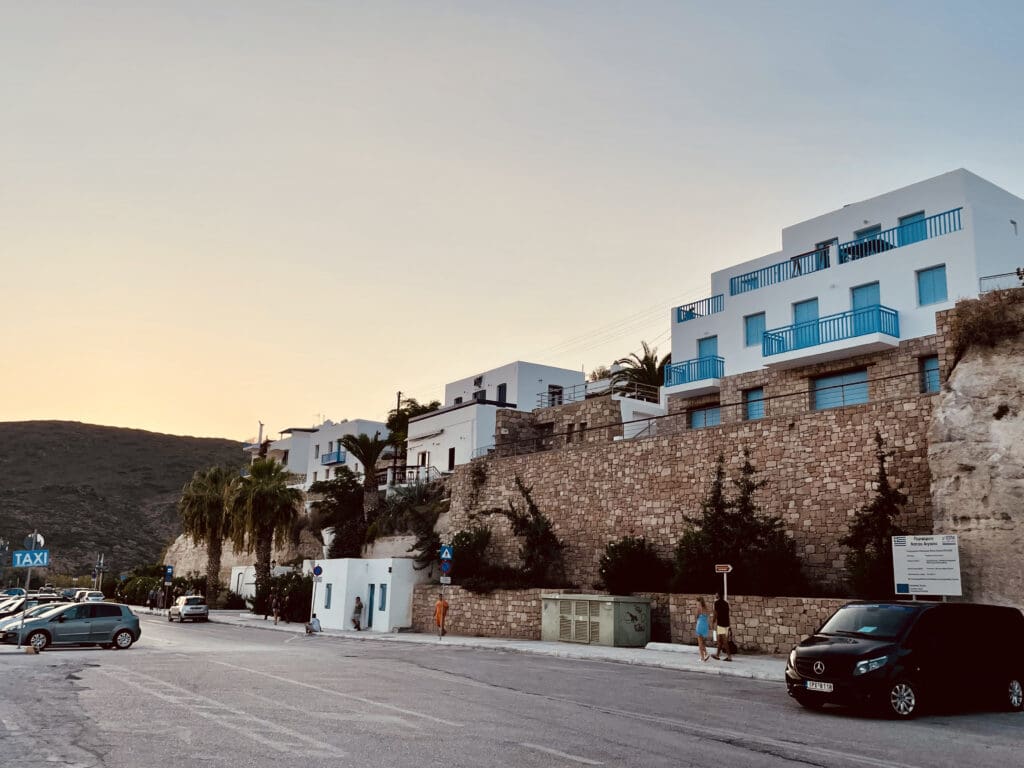
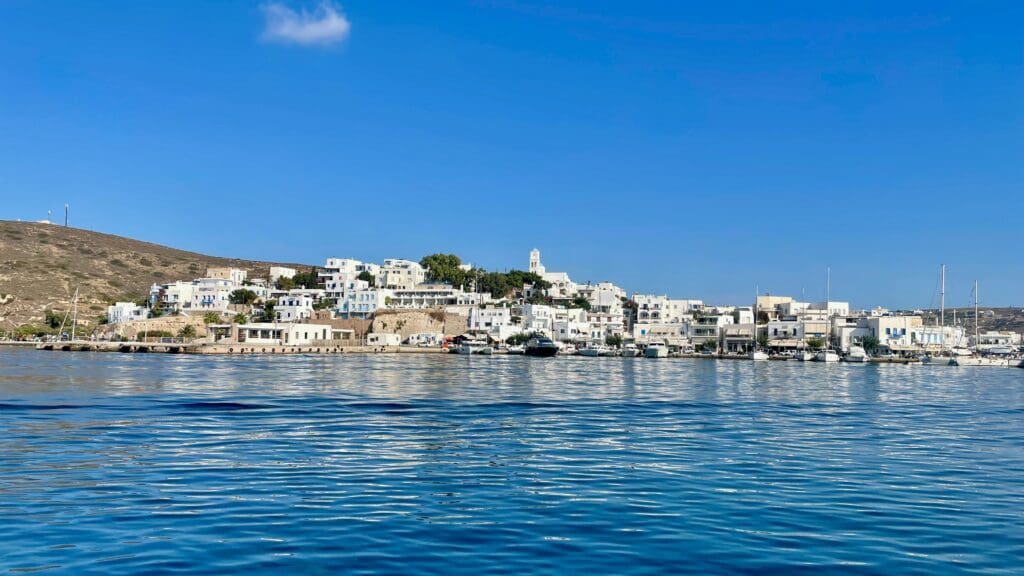
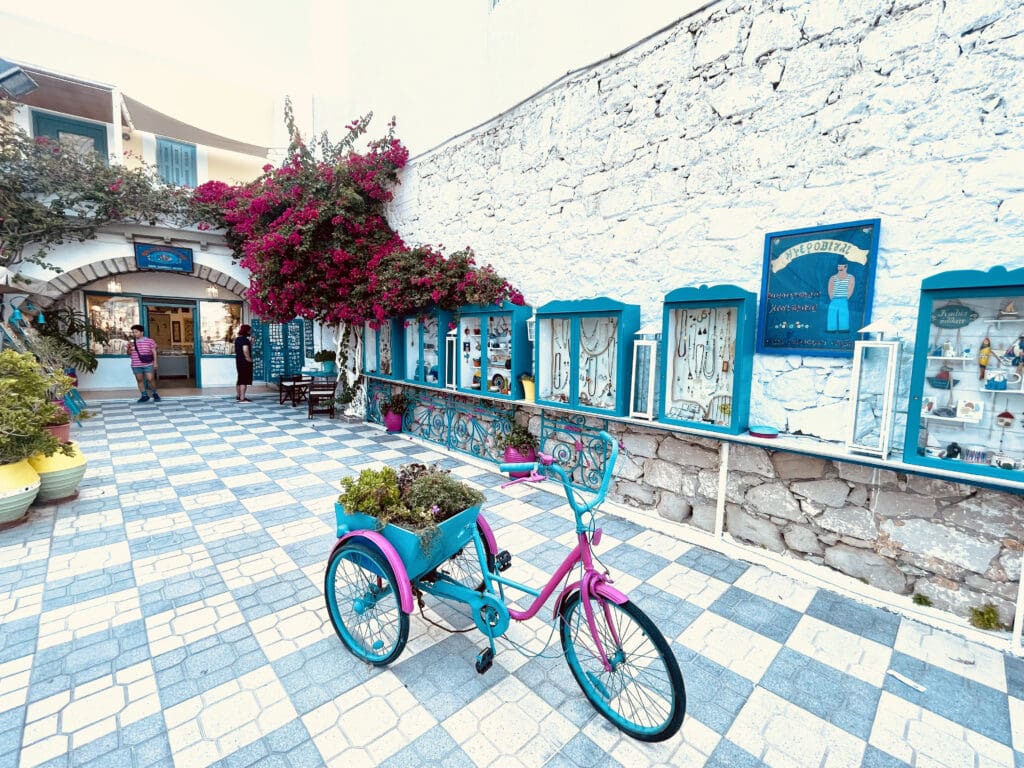
As the island’s main port town, Adamas is where most visitors arrive by ferry. It offers the largest concentration of hotels, restaurants, cafés, shops, and tour operators. If you’re relying on public transportation or only visiting for a few days, Adamas makes a practical base because everything is within easy reach.
Plaka: Best for Traditional Charm
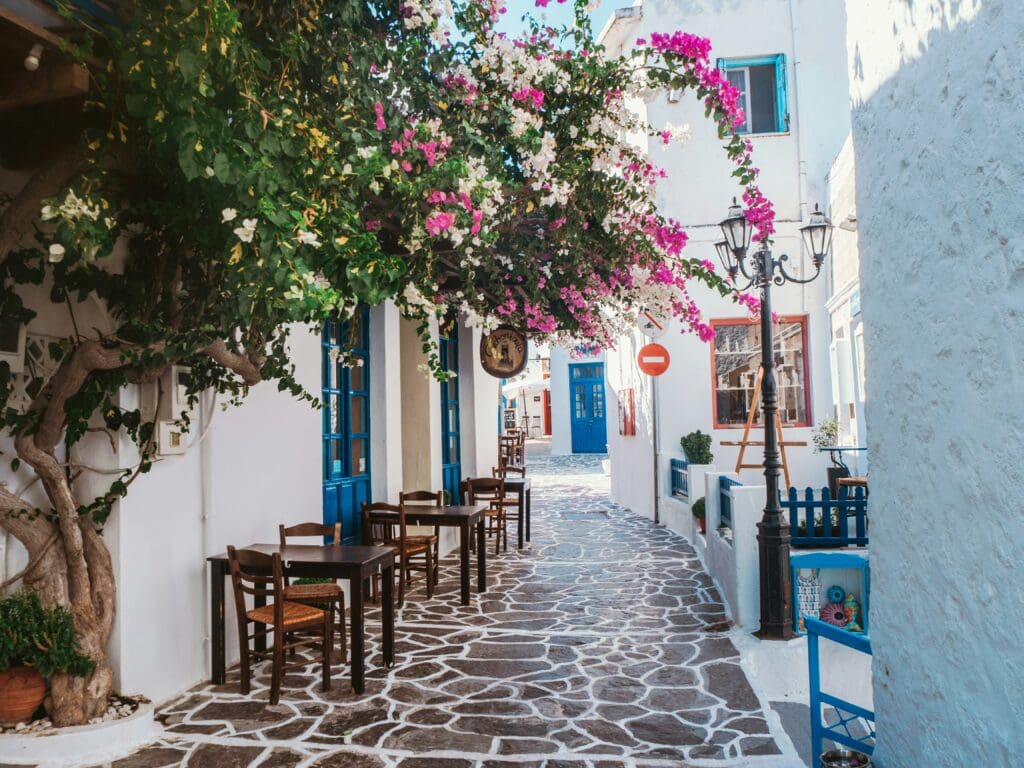
Plaka is the island’s capital and one of the most picturesque villages in Milos. Whitewashed homes, winding alleyways, colorful doors, and beautiful sunset viewpoints create the classic Cycladic atmosphere many travelers imagine when they think of Greece. Staying here puts you in the heart of one of the island’s most charming communities.
Trypiti: Best for a Quiet Local Experience
We chose to stay in Trypiti and would happily stay there again. We stayed at the Deluxe Sunrise apartment and it had the best views.
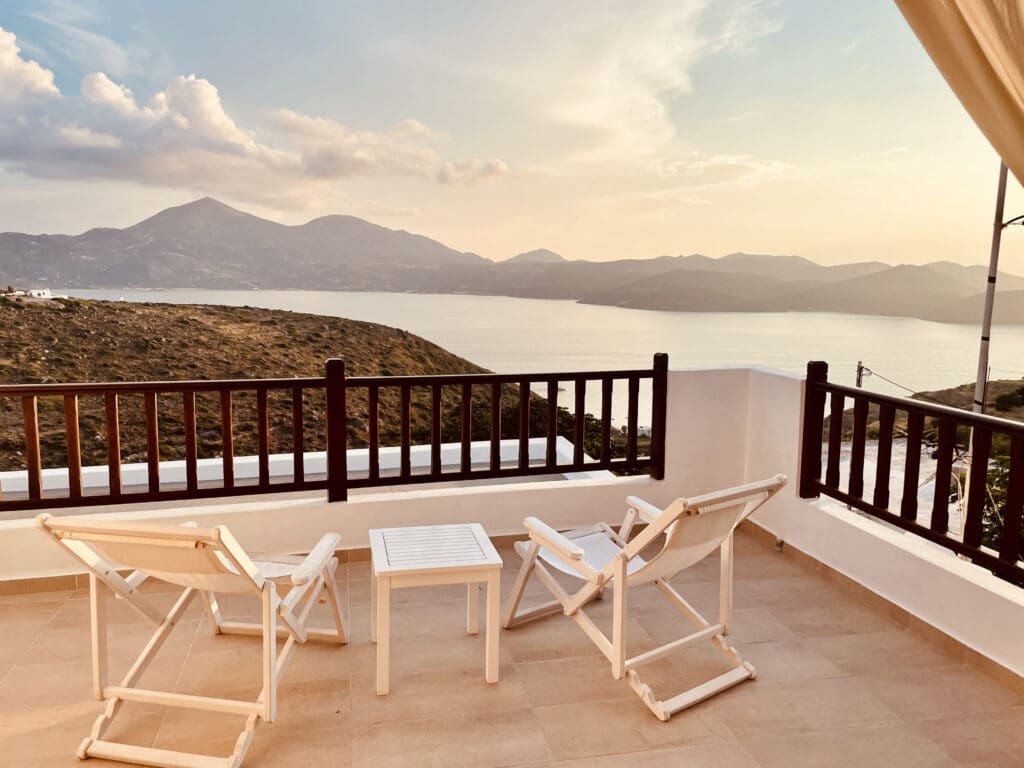
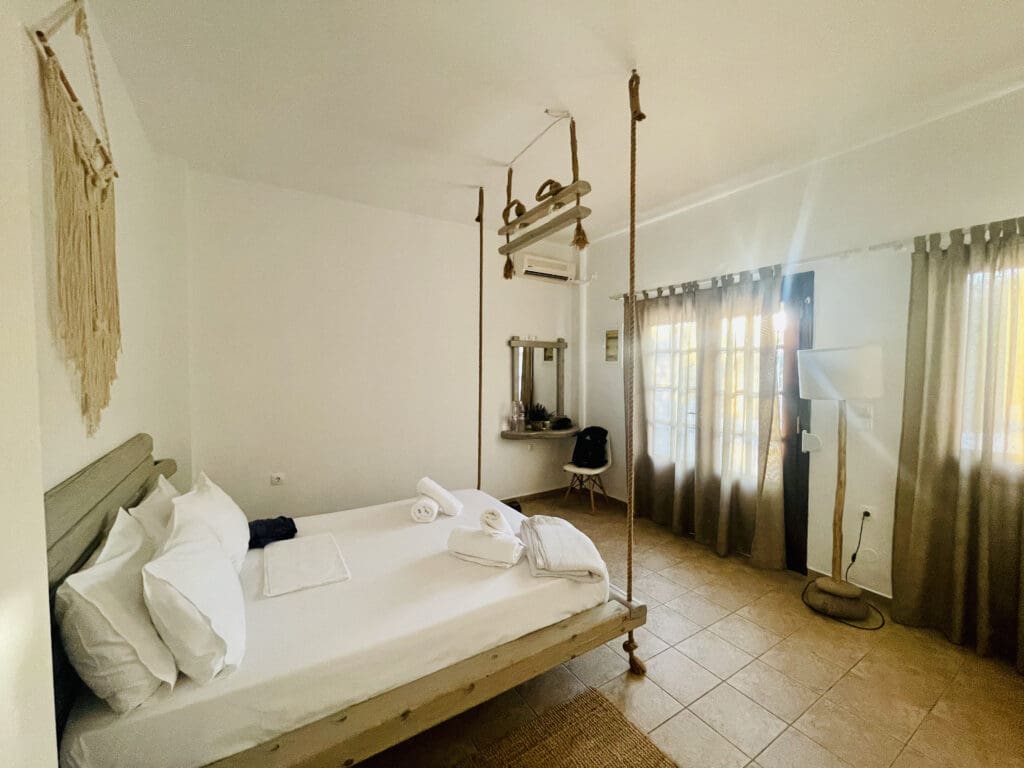
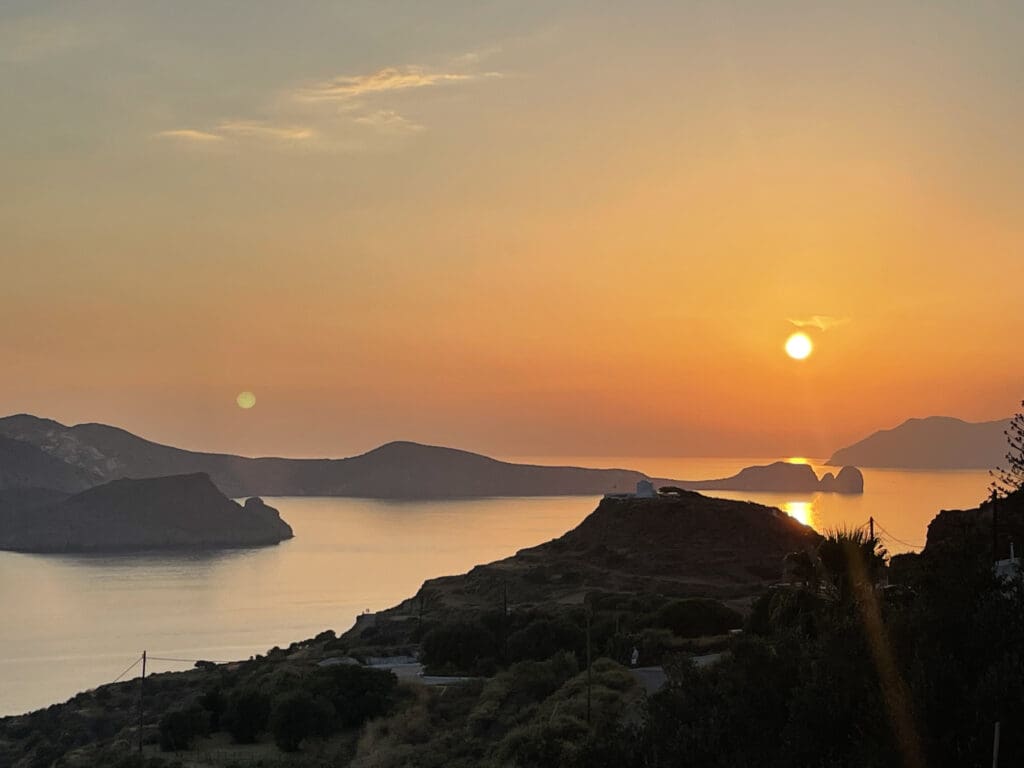
Located just outside Plaka, Trypiti offers a quieter atmosphere while still being close to many of the island’s highlights. The village feels more residential and less tourist-oriented, allowing visitors to experience a slower pace of life. After busy days exploring beaches and coastal villages, returning to Trypiti each evening felt peaceful and authentic.
Pollonia: Best for Relaxation
Located on the northeastern side of the island, Pollonia has developed a reputation as one of the most relaxing places to stay in Milos. The waterfront promenade is lined with restaurants and cafés, and the atmosphere feels more refined and laid-back. Travelers looking for a quieter beach vacation often gravitate toward Pollonia.
Klima: Best for Iconic Photos
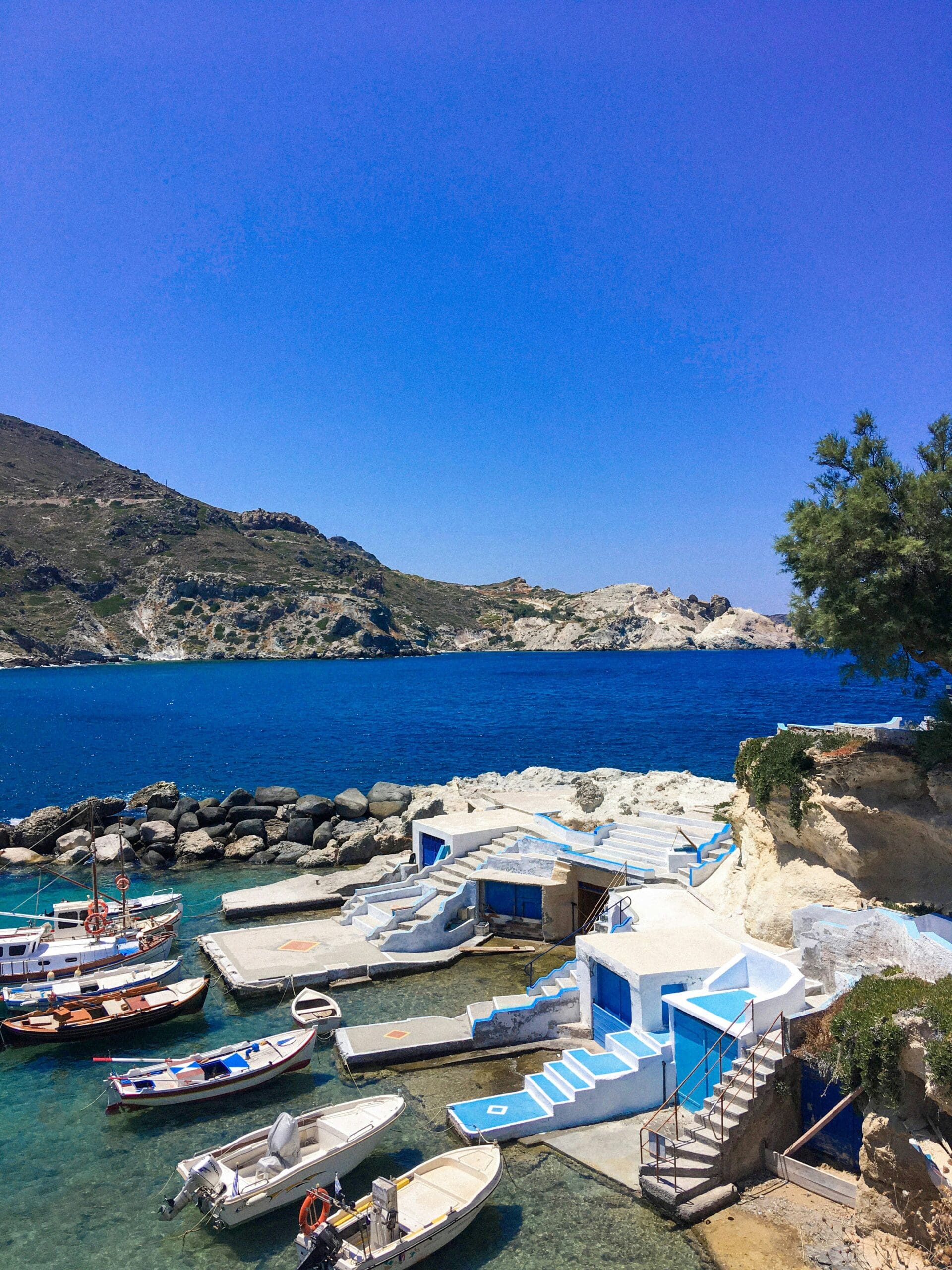
Klima is famous for its colorful syrmata, the traditional fishermen’s houses built directly along the water. While accommodations here are limited, staying in one of these converted boathouses offers one of the most unique experiences on the island and places you directly on the shoreline.
So, Where Would I Stay?
For first-time visitors planning to rent a car, I would recommend Adamas, Plaka, or Trypiti.
Adamas offers convenience, Plaka offers atmosphere, and Trypiti provides a quieter local feel while remaining centrally located. Since many of Milos’ beaches and attractions are spread across the island, having a central base and a rental car matters more than being directly on the beach.
Arriving by Ferry from Santorini
We arrived in Milos by ferry from Santorini, a route that is both easy and scenic. The ferry docks in Adamas, the island’s main port town, and from there it was a short drive to my accommodations in Trypiti.
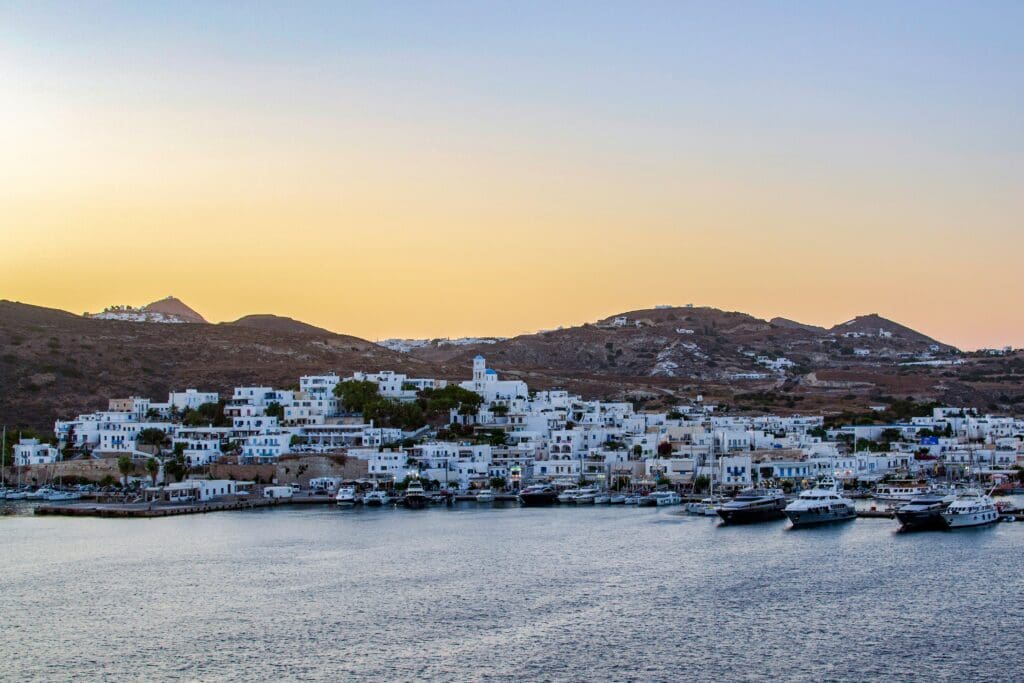
One of the things we enjoy most about Greek island hopping is how seamless it can be. Instead of airports and long security lines, you’re often greeted by fishing boats, waterfront cafés, and the promise of a completely different island experience just a few hours away.
The moment we arrived in Milos, the pace felt noticeably slower than Santorini. There were fewer crowds, less traffic, and an immediate sense that this was a place to explore rather than simply check off a list of attractions.
Why Renting a Car Was Essential
If there’s one piece of advice I would give anyone visiting Milos, it’s to rent a car.
One of the things I appreciated most was how easy the process was. After arriving by ferry in Adamas, our rental car pickup was literally across the street from the ferry terminal. Within minutes of stepping off the boat, we was on our way to Trypiti and ready to start exploring the island. One thing to keep in mind, you should get your International Driver’s Permit before you leave for your trip. I was asked to show it in Santorini but not in Milos.
That said, driving in Milos comes with a few surprises that first-time visitors should know about.
Some of the island roads can be incredibly narrow—sometimes feeling barely wider than the car itself. While I never found driving difficult, it definitely requires paying attention, especially when another vehicle appears around a bend. A small rental car is your friend here.
Parking is another thing to keep in mind. Unlike many destinations in the United States, parking is often not directly at your hotel or rental property. In Trypiti, and in several other villages around the island, we often parked in a nearby public area and walked the rest of the way. Fortunately, the villages are small, and the walks were usually short.
For us, having a car completely changed the experience. Milos isn’t an island where I would want to rely solely on buses. The freedom to drive from one beach to another, stop at viewpoints along the way, and explore at our own pace was one of the highlights of the trip.
Things to See and Do in Milos
One of the reasons I wish we had spent more than three days in Milos is that there is far more to see and do than many people realize. While the island is known for its beaches, some of our favorite experiences came from simply exploring its villages, coastline, and hidden corners.
Walk Across the Lunar Landscape of Sarakiniko

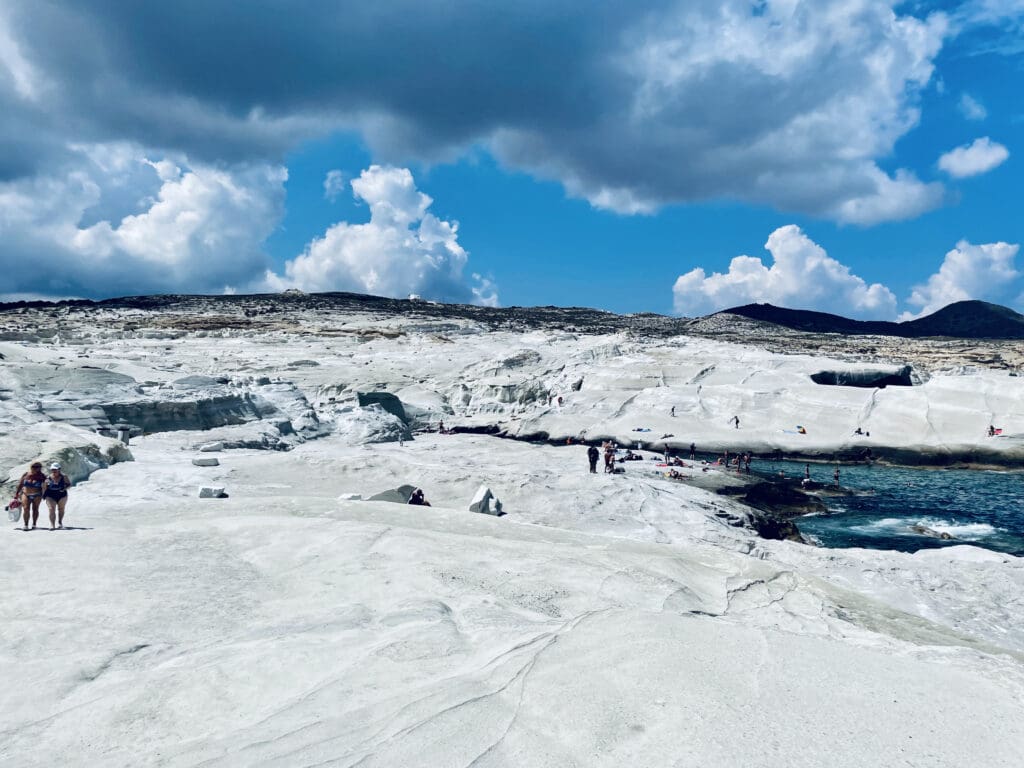
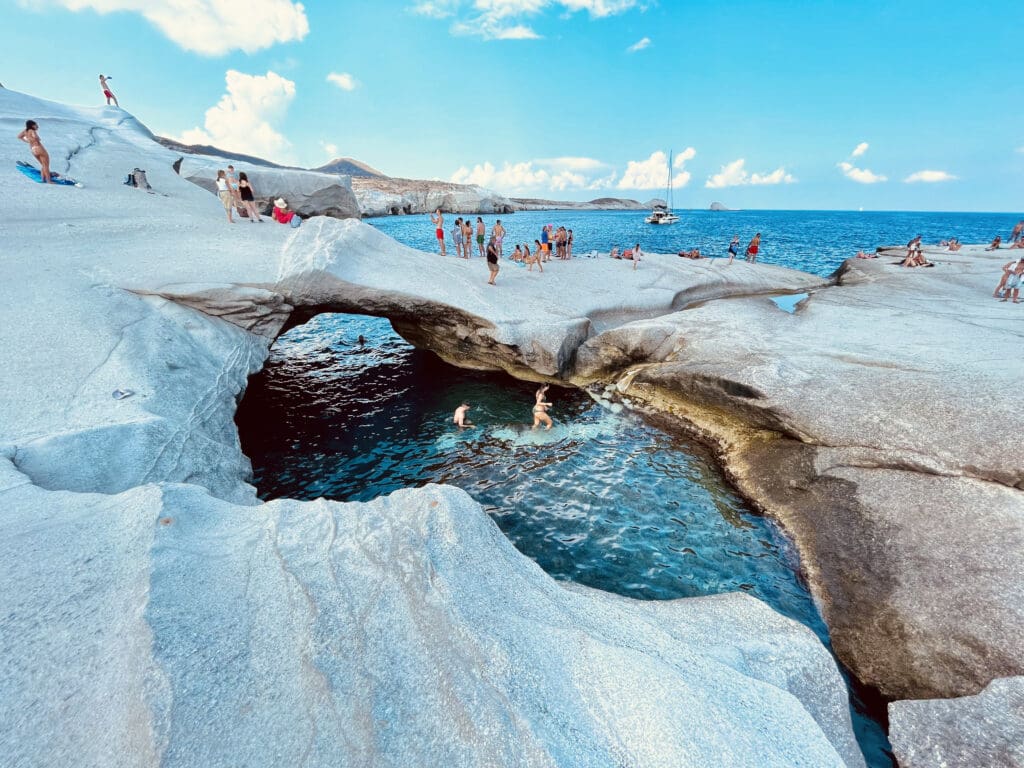
No visit to Milos is complete without seeing Sarakiniko. Often described as a lunar landscape, this stretch of smooth white volcanic rock contrasts dramatically against the deep blue waters of the Aegean Sea. It’s unlike anything else I have seen in Greece.
Arriving early in the morning allowed us to enjoy the scenery before the crowds arrived making for some incredible photographs.
Take a Boat Cruise Around the Island
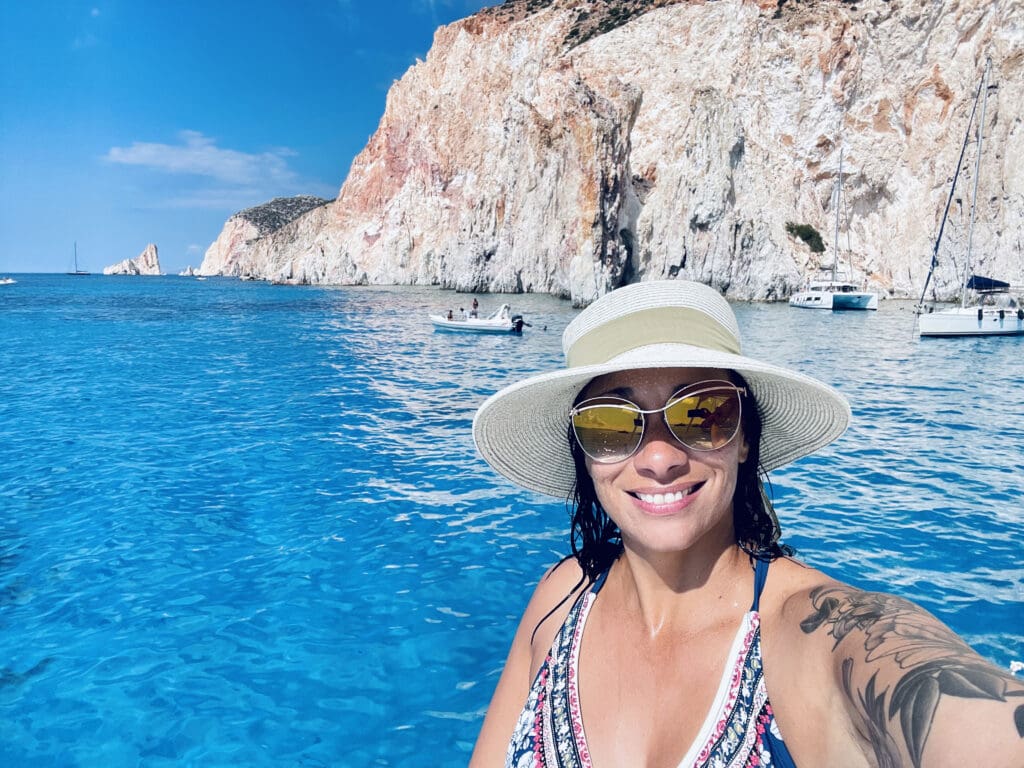
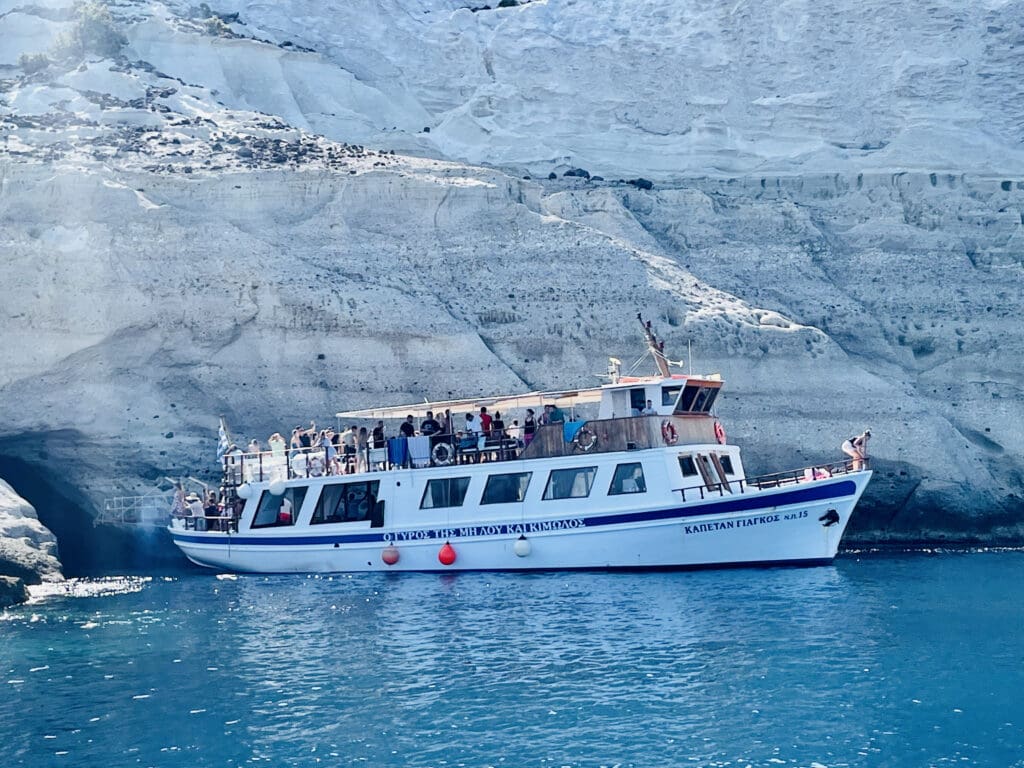
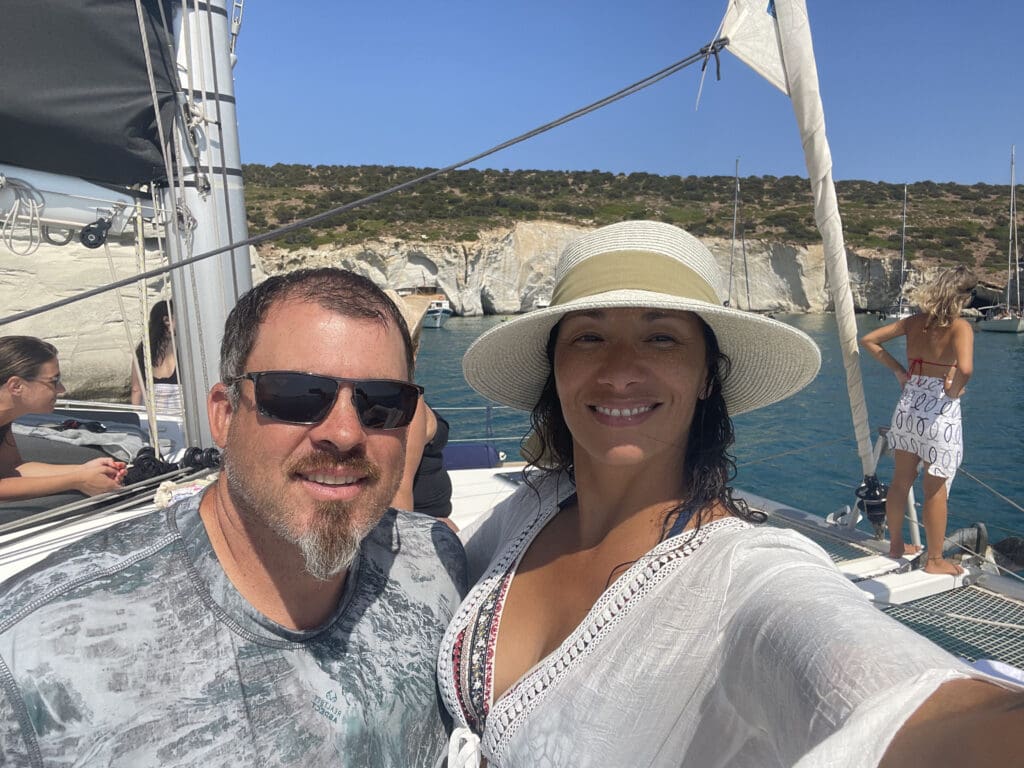
If I could recommend only one excursion in Milos, it would be a boat cruise.
Seeing the island from the water reveals a completely different side of Milos. Hidden coves, sea caves, colorful rock formations, and remote swimming spots become accessible only by boat. Many cruises also visit Kleftiko, one of the island’s most famous natural attractions, known for its striking white cliffs and crystal-clear water.
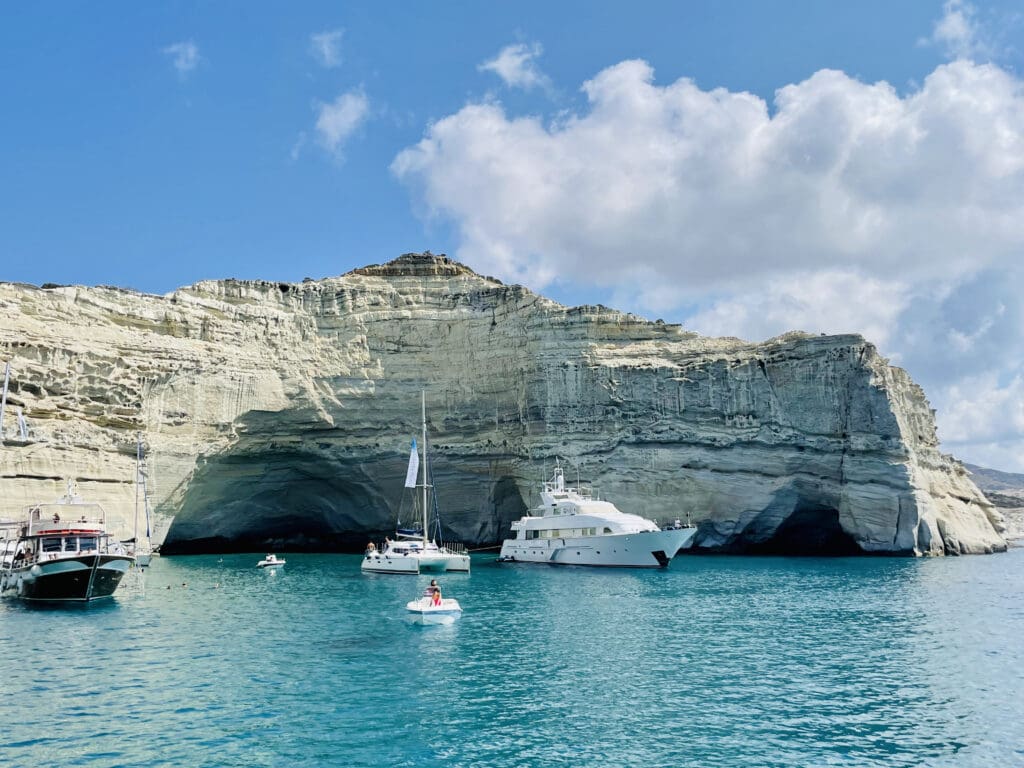
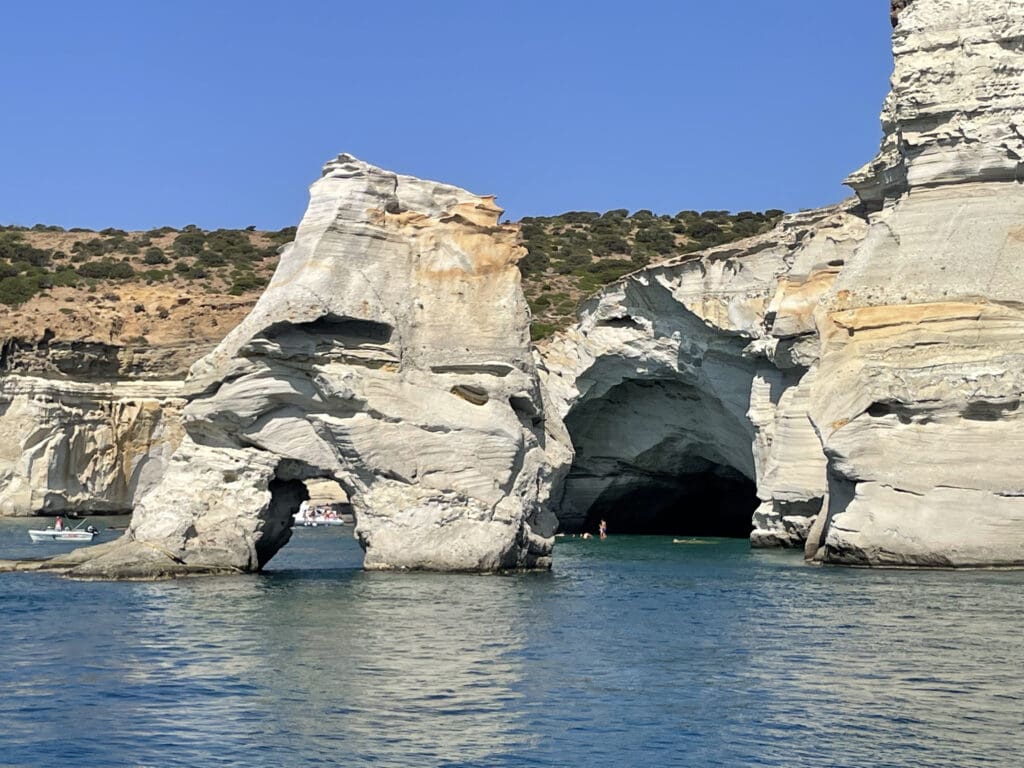
For many visitors, this becomes the highlight of their trip.
Explore the Charming Streets of Plaka
Plaka is the kind of Greek village many travelers dream about. Whitewashed buildings, narrow alleyways, colorful bougainvillea, and panoramic views create a postcard-perfect setting.
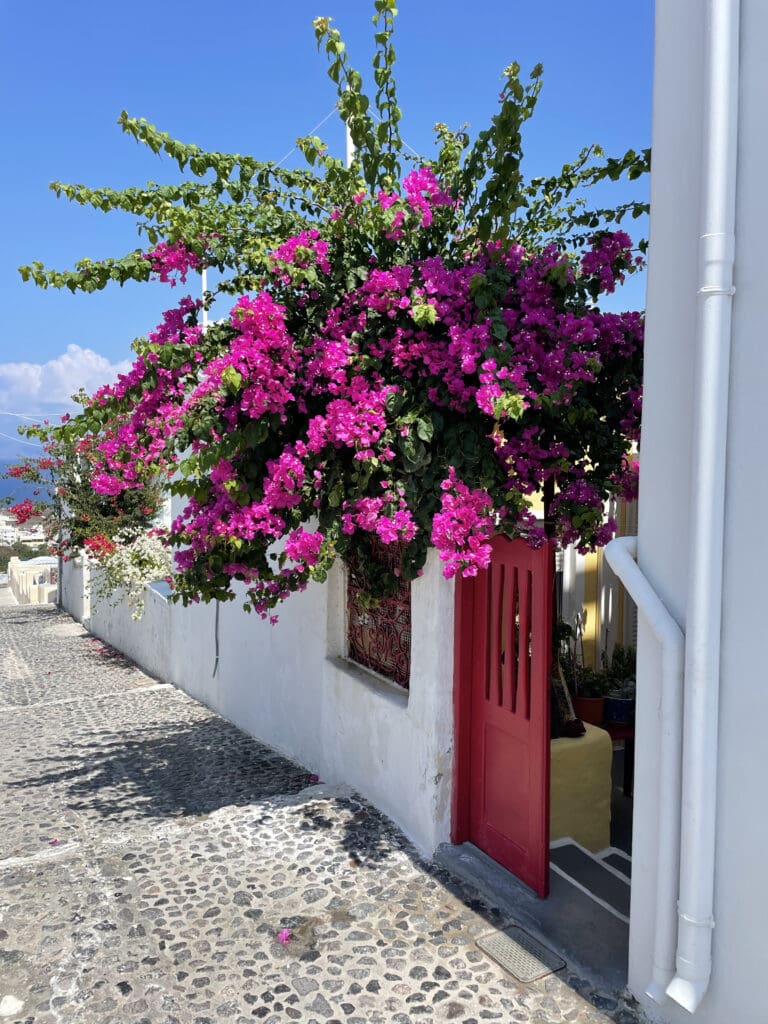
Spend time wandering without an agenda. Some of our favorite moments in Greece have come from simply getting lost in villages like this.
Visit the Fishing Village of Mandrakia
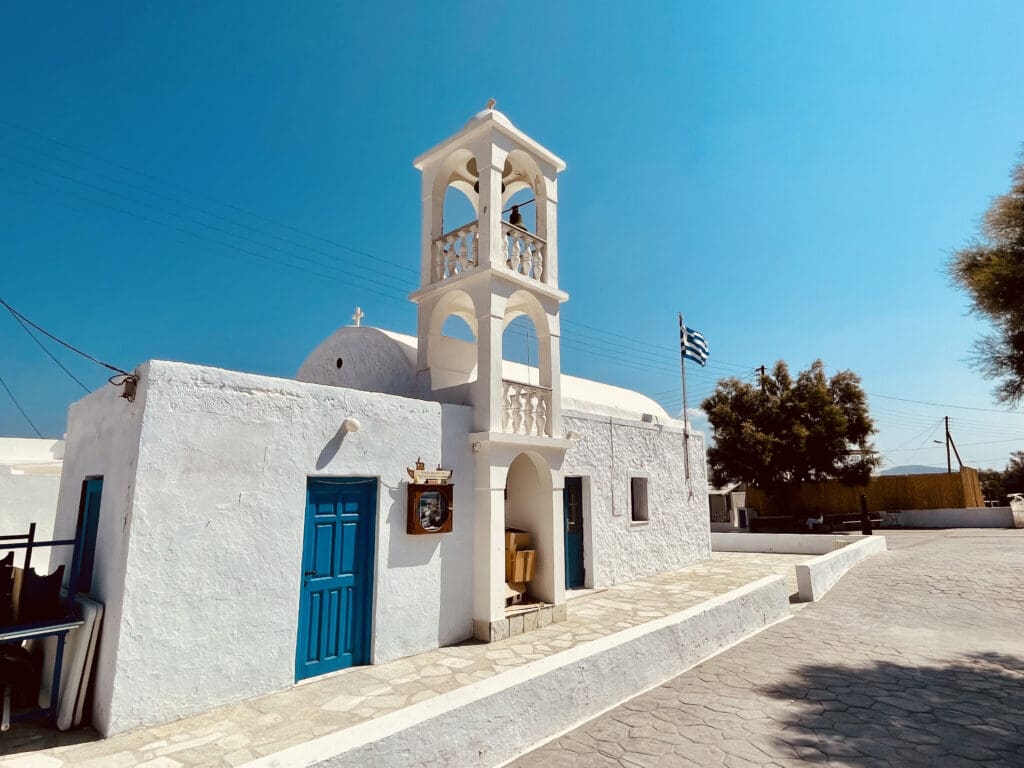
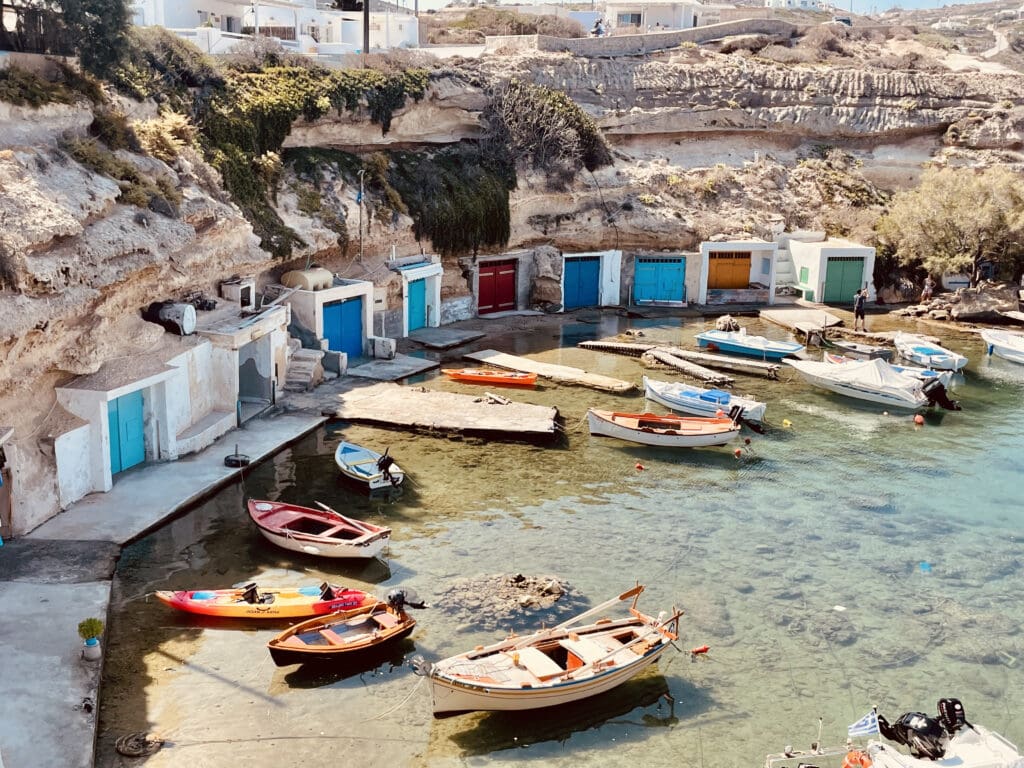

One of my favorite stops in Milos was the small fishing village of Mandrakia.
Tucked into a quiet cove along the island’s northern coastline, Mandrakia feels like a place where time slows down. Whitewashed fishermen’s houses with brightly painted boat garages line the waterfront, while small fishing boats gently bob in the crystal-clear water. It’s a peaceful spot that invites you to put the camera down for a moment and simply enjoy the surroundings.
The village itself is small, but that’s exactly what makes it so charming. We enjoyed wandering along the waterfront, taking in the views, and photographing one of the prettiest fishing villages we visited during our time on the island.
If you’re exploring the northern coast, I highly recommend planning your visit around lunchtime and stopping at Medusa Restaurant. Perched right along the water, it’s the perfect place to enjoy fresh seafood while taking in the harbor views. Sitting just steps from the sea with a leisurely Greek lunch was one of those simple travel moments that ended up becoming one of my favorite memories from Milos.
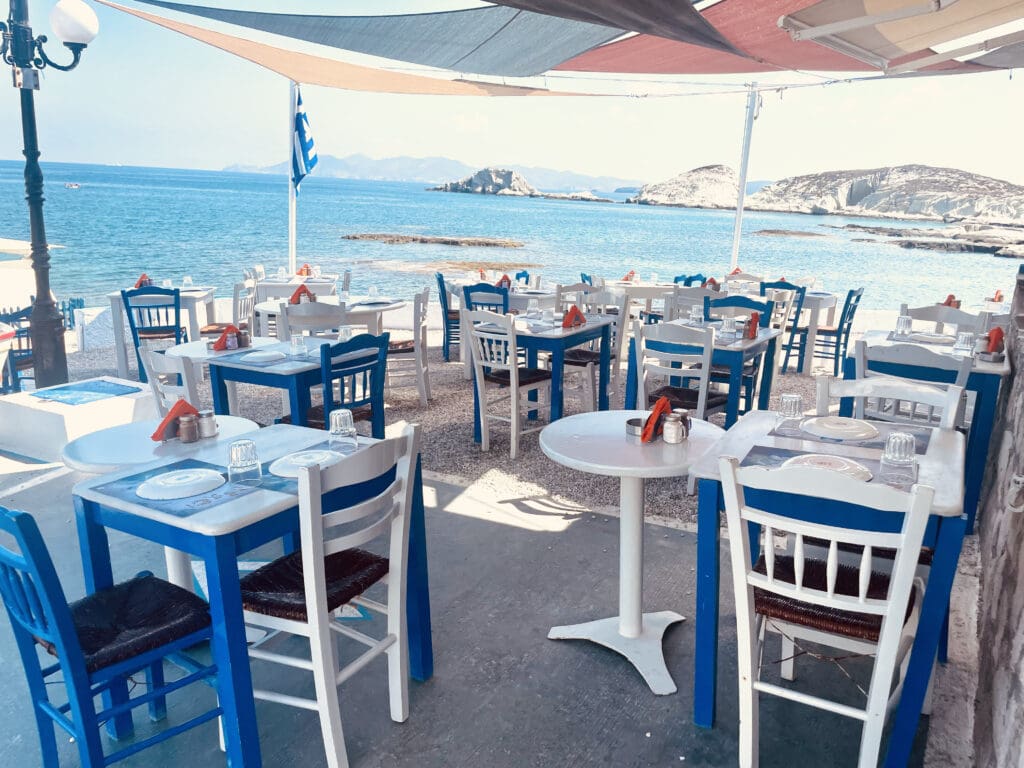
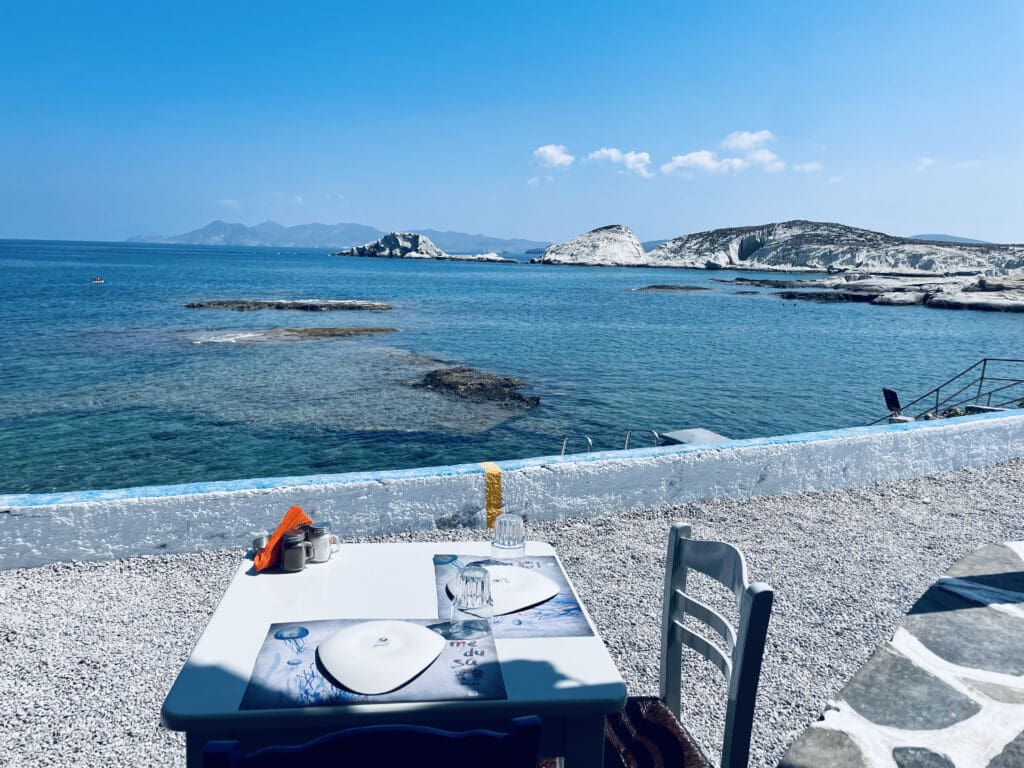
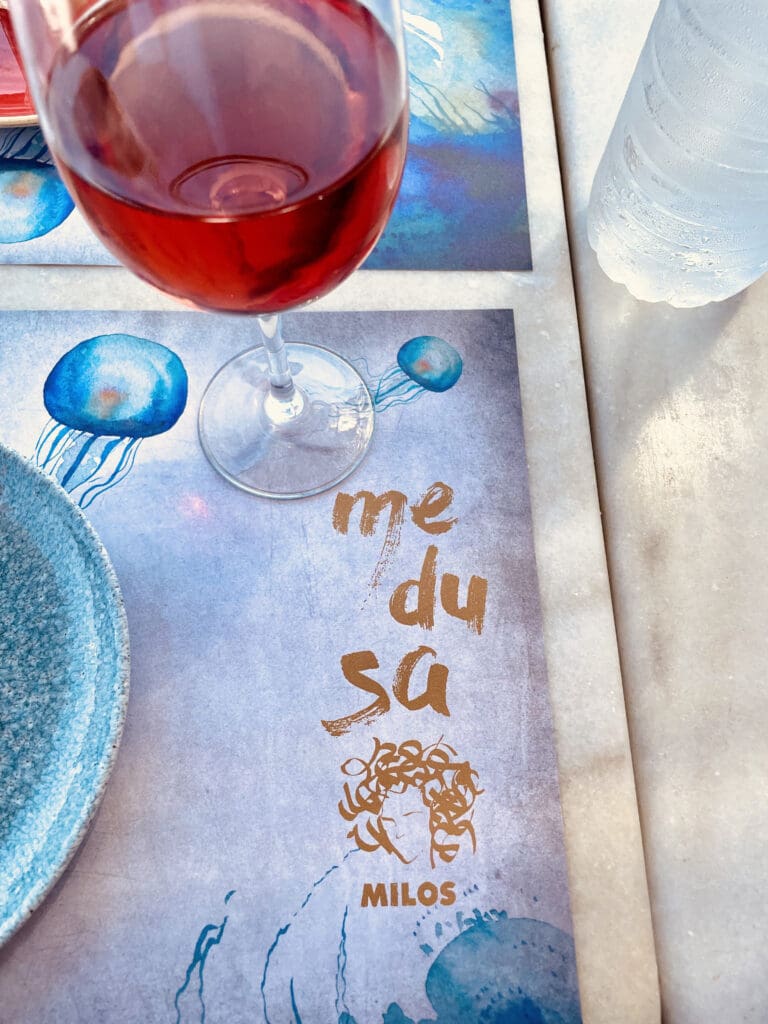
Mandrakia is also conveniently located near Sarakiniko, making it an easy addition to your day’s itinerary.
Beach Hop Around the Island
One of the things that surprised us most about Milos was how different each beach felt.
Sarakiniko may be the most famous, but beaches like Firiplaka, Paleochori, Tsigrado, and Agia Kyriaki each offer their own personality. Some feature dramatic volcanic cliffs, others soft sand and calm swimming waters.
Part of the fun is discovering your own favorite.
Watch the Sunset from Plaka
While Santorini may be known for sunsets, Milos offers some spectacular evening views of its own.
The elevated position of Plaka provides sweeping views across the island and the sea beyond. As the sun begins to set, the whitewashed buildings take on a golden glow, creating a quieter and more relaxed sunset experience than many of Greece’s busier destinations.
Step Back in Time at the Catacombs and Ancient Theatre
Beyond its stunning coastline, Milos also has a fascinating history that’s worth exploring.
The Catacombs of Milos are among the most important early Christian monuments in Greece, dating back to the 1st and 5th centuries AD. Walking through these underground burial chambers offers a glimpse into the island’s early Christian past and provides a completely different experience from the beaches and villages that Milos is best known for.
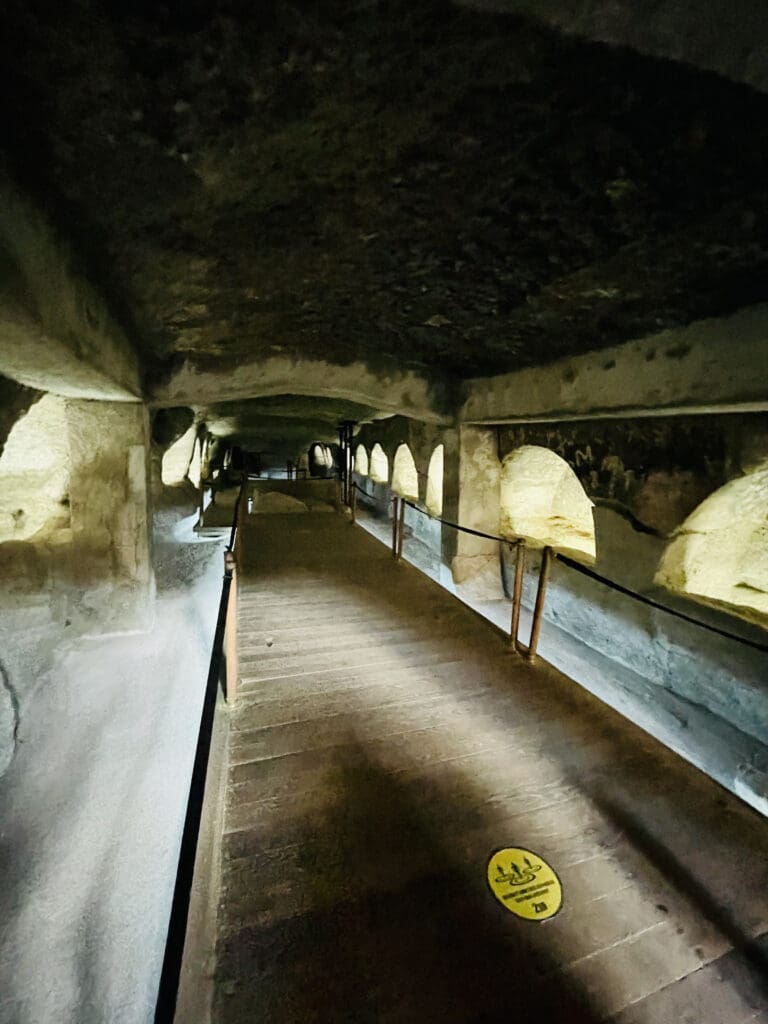
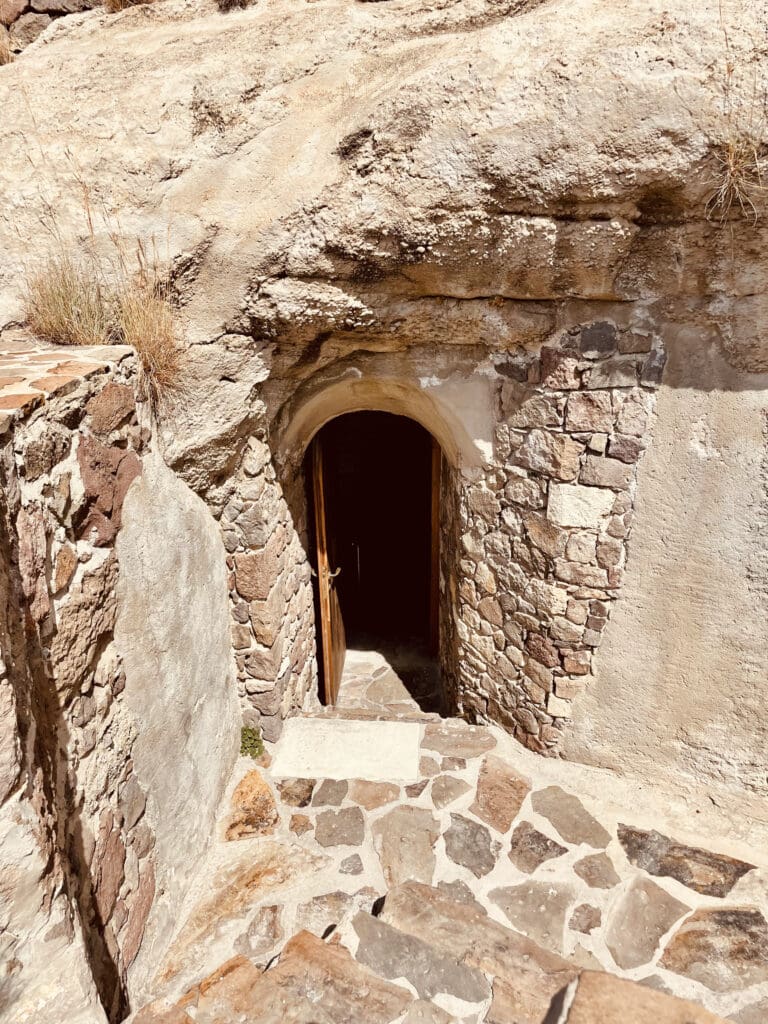
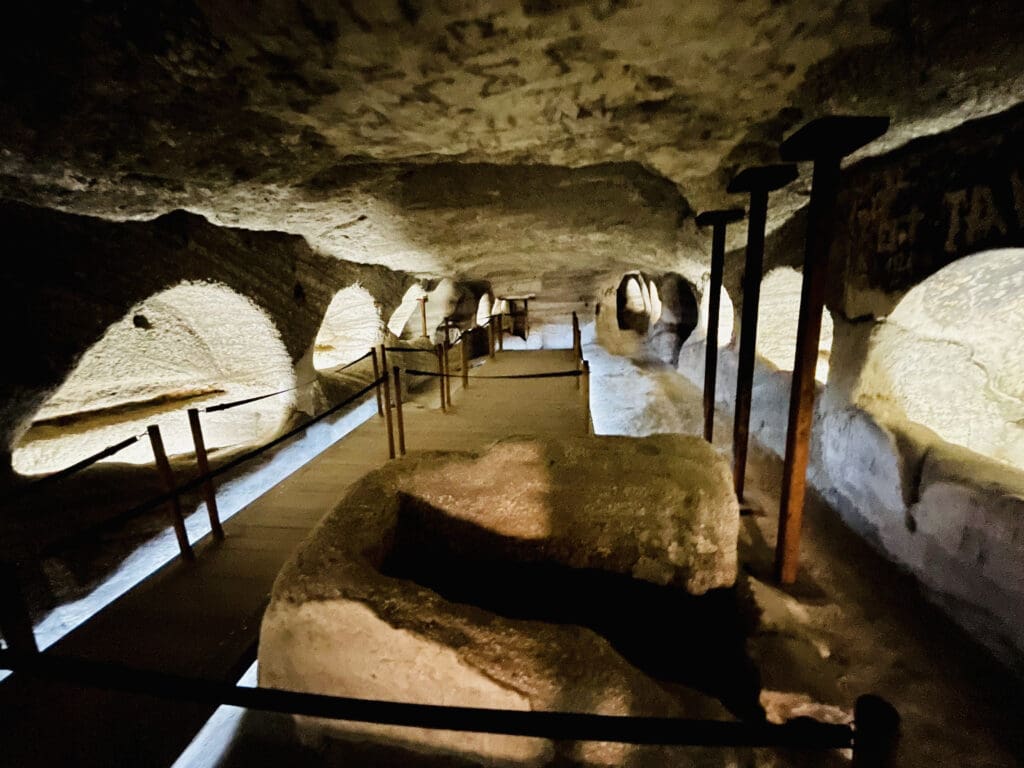
One thing to know before you go: admission to the catacombs is purchased on site, and visits are only permitted as part of a guided group. Self-guided tours are not allowed, so you may have to wait a short time for the next group to begin. Alternatively, many organized island tours include a stop at the catacombs, allowing you to purchase them as part of a larger sightseeing experience.
Just a five-minute walk from the catacombs is the Ancient Theatre of Milos, and it’s well worth adding to your visit. Built during the Hellenistic period and later renovated by the Romans, the theater overlooks the sparkling Aegean Sea, making it one of the most scenic historical sites on the island. Best of all, there is no admission fee, so you can take your time exploring the site and enjoying the incredible views.
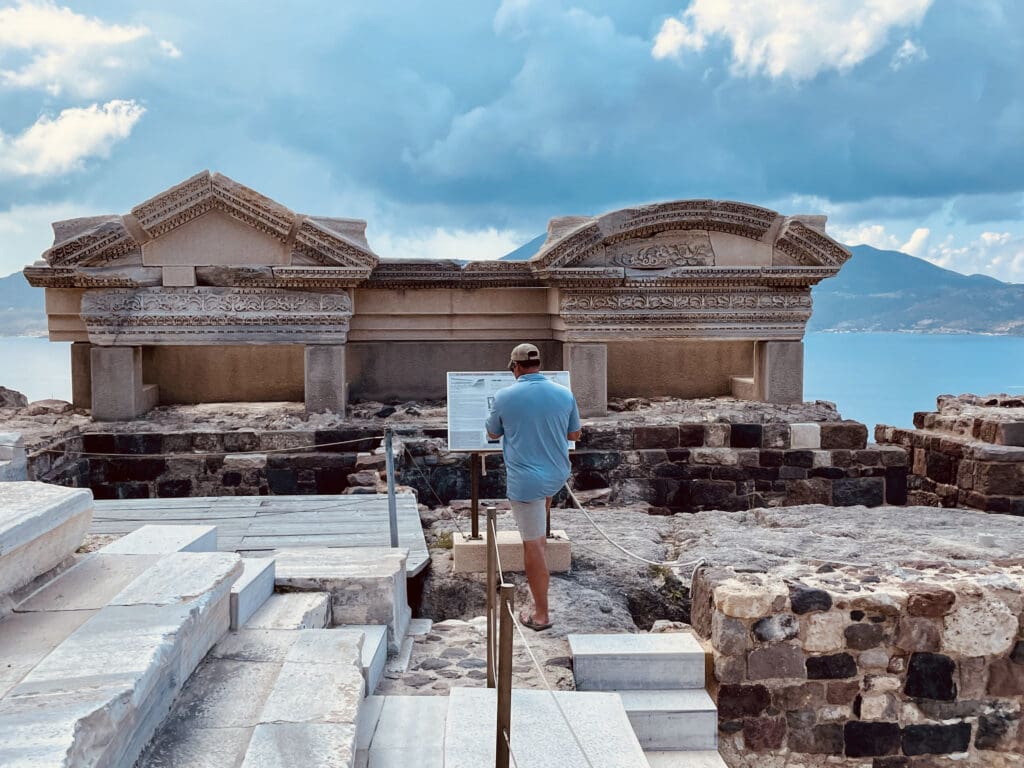
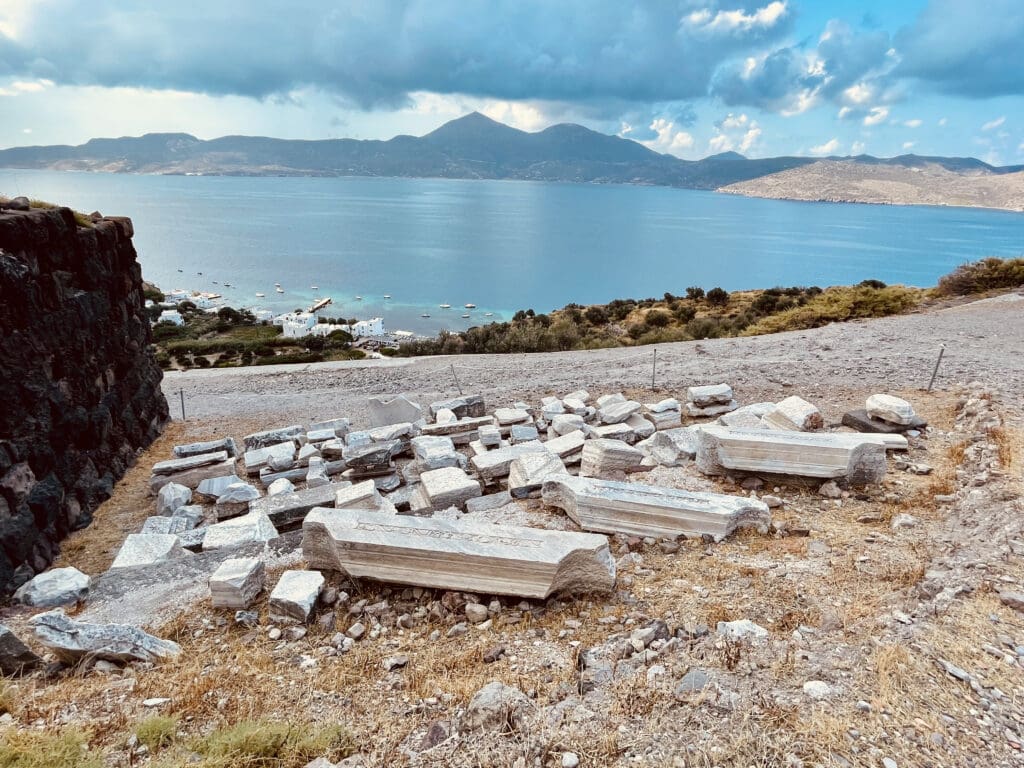
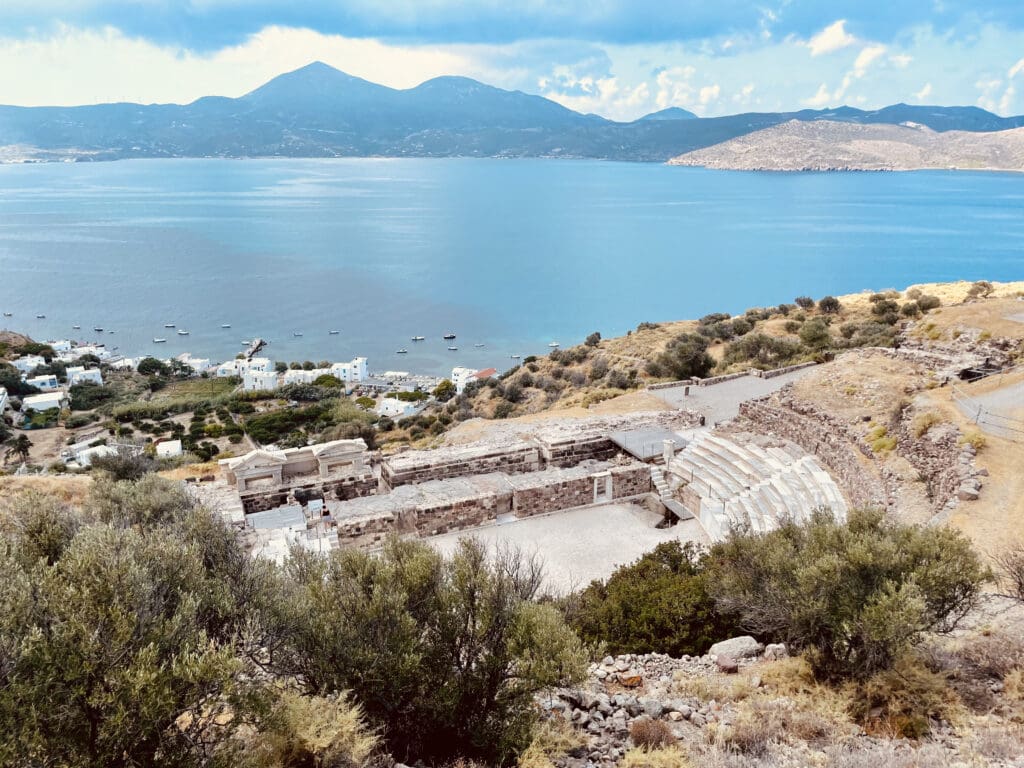
Since the catacombs and theater are located so close together, it’s easy to combine them into one stop, especially if you’re staying nearby in Trypiti or exploring the central part of the island.
Climb to Profitis Ilias Chapel for Panoramic Views
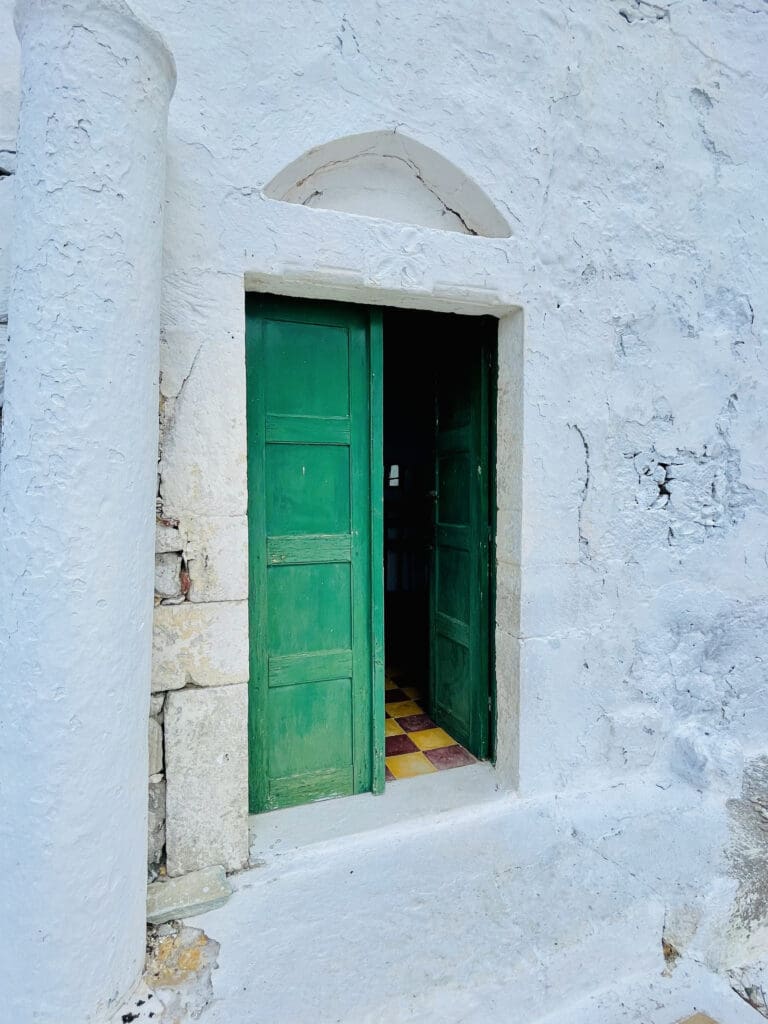
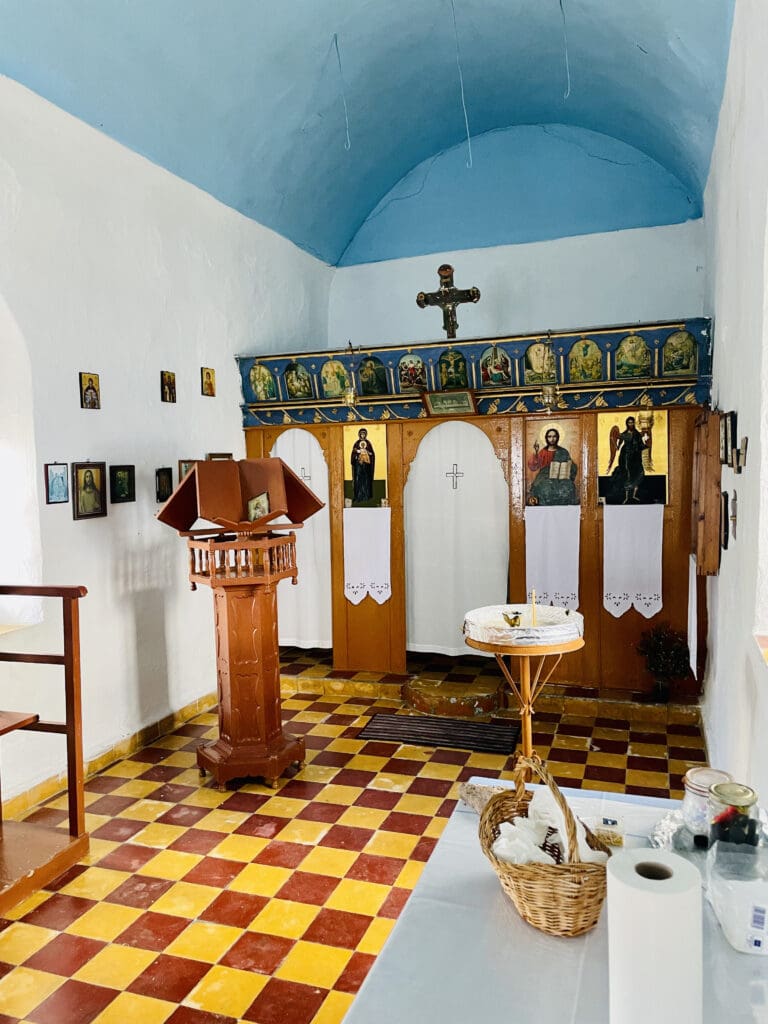
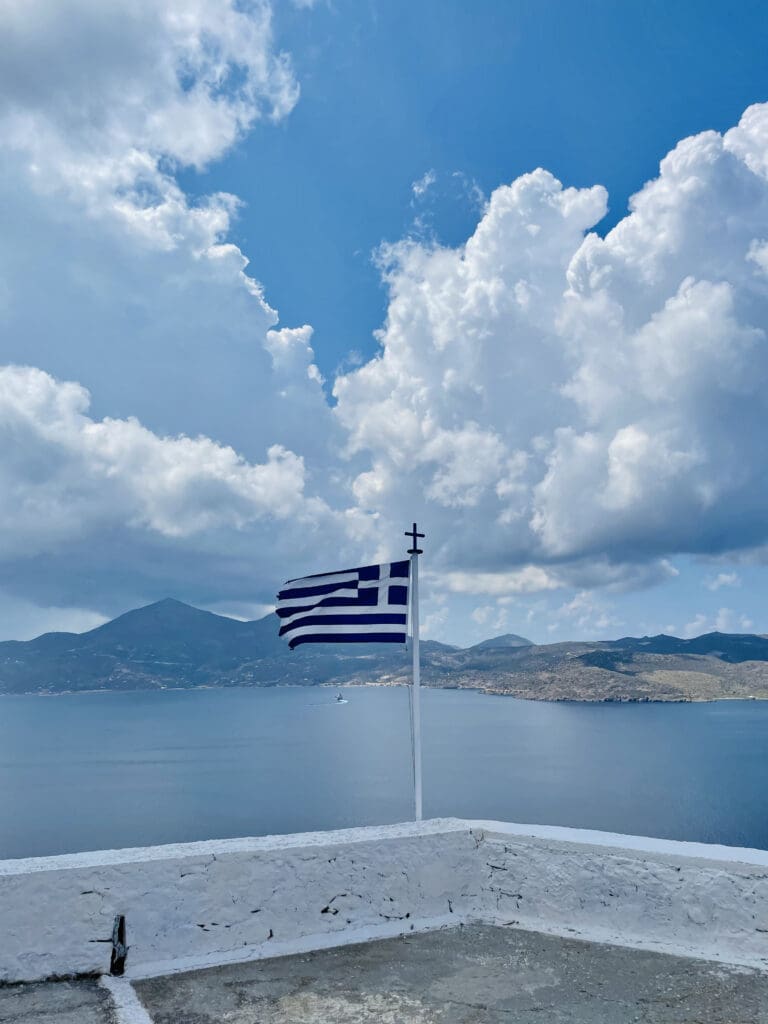
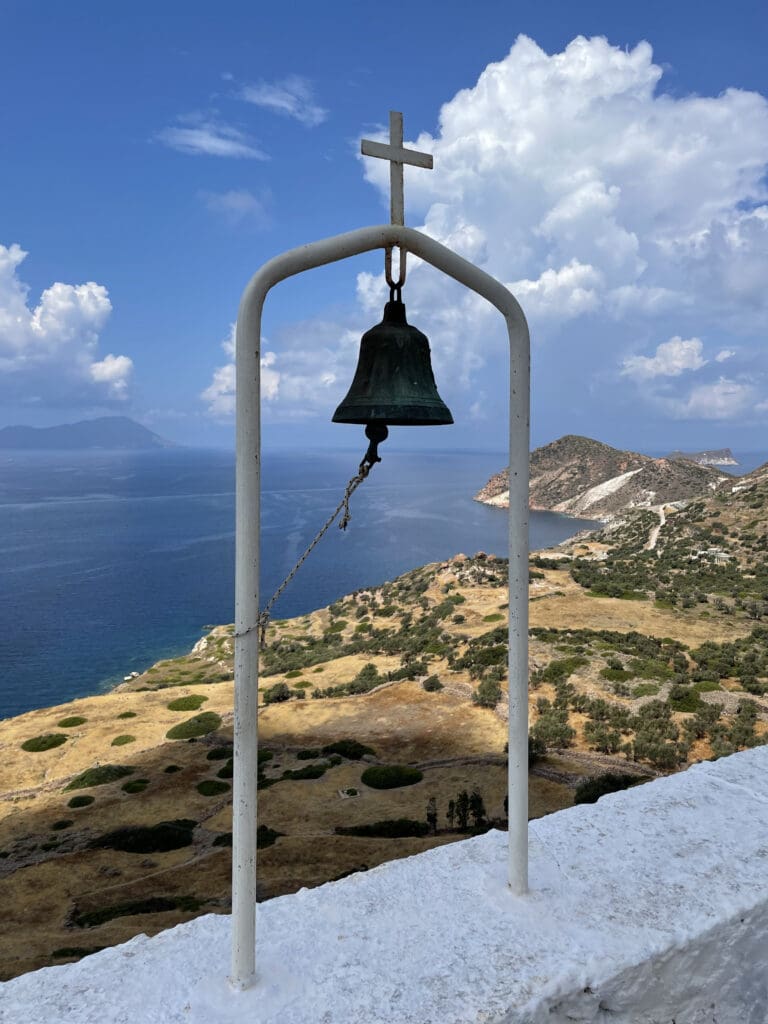
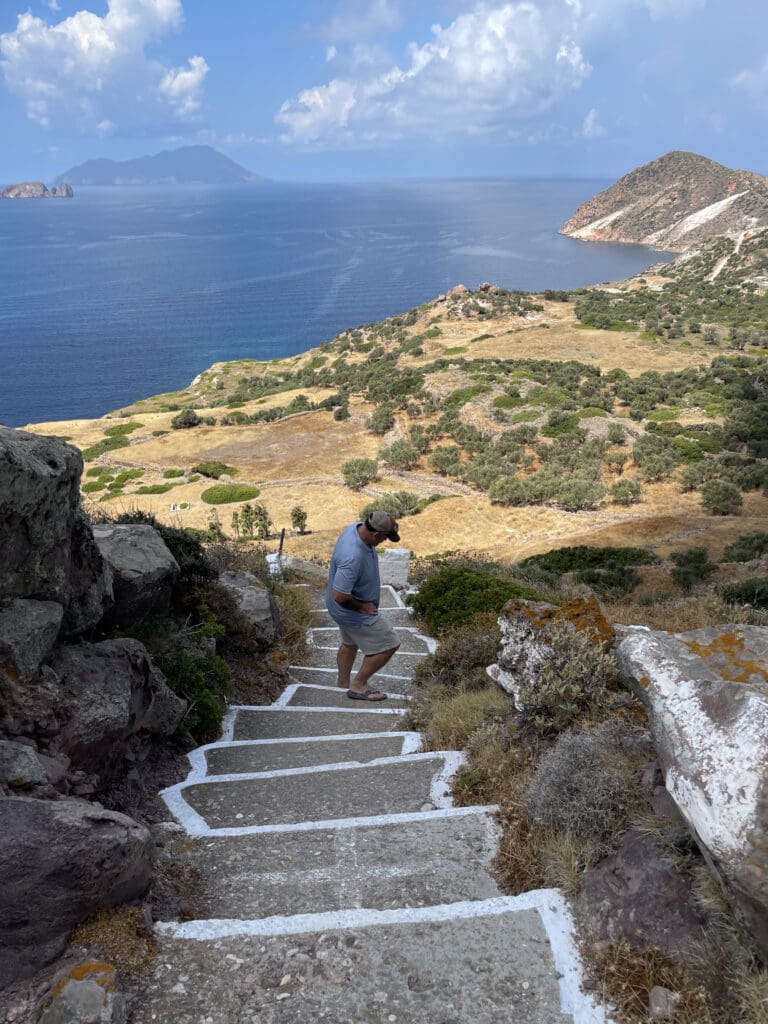
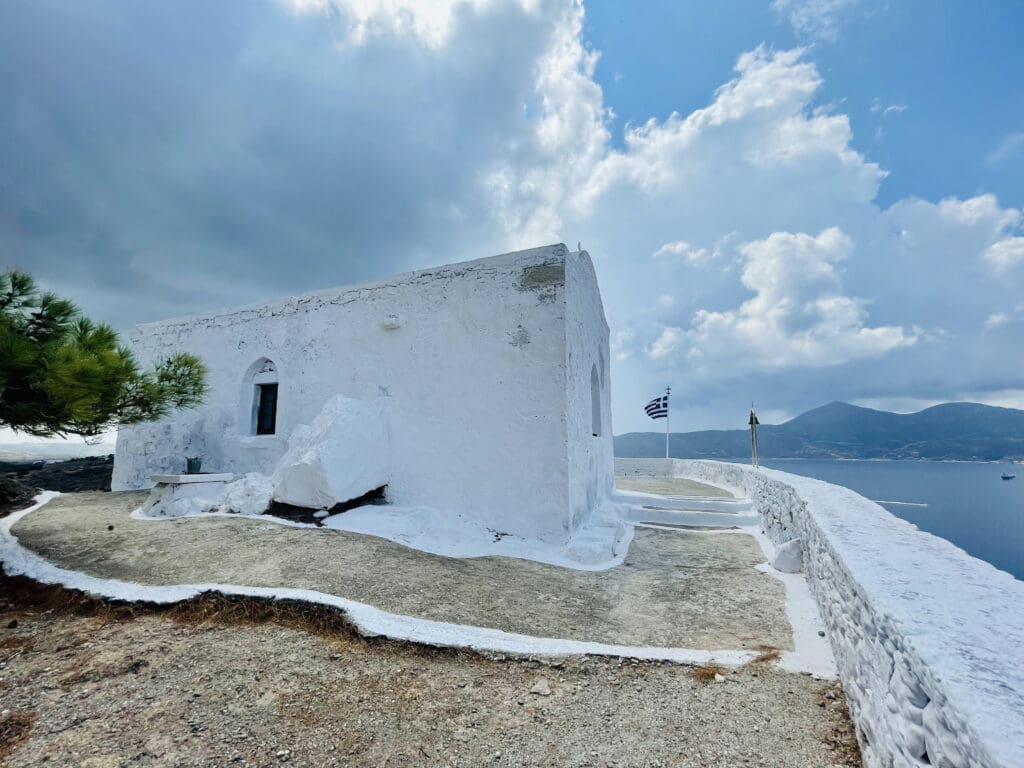
One of my favorite viewpoints in Milos wasn’t crowded at all.
The hike up to Profitis Ilias Chapel requires climbing roughly 150 stone steps to reach the top. It’s enough to get your heart pumping, especially on a warm day, but the reward is well worth the effort.
When we visited, we had the entire viewpoint to myself. From the top, we were treated to sweeping views over the island, the surrounding coastline, and the brilliant blue Aegean Sea. It was one of those peaceful moments that reminded me why I love traveling beyond the most popular attractions.
If you’re comfortable with a bit of climbing, I highly recommend adding this stop to your itinerary. Bring a bottle of water, wear comfortable shoes, and take your time on the way up—the views only get better with every step.
Spend Time in Pollonia
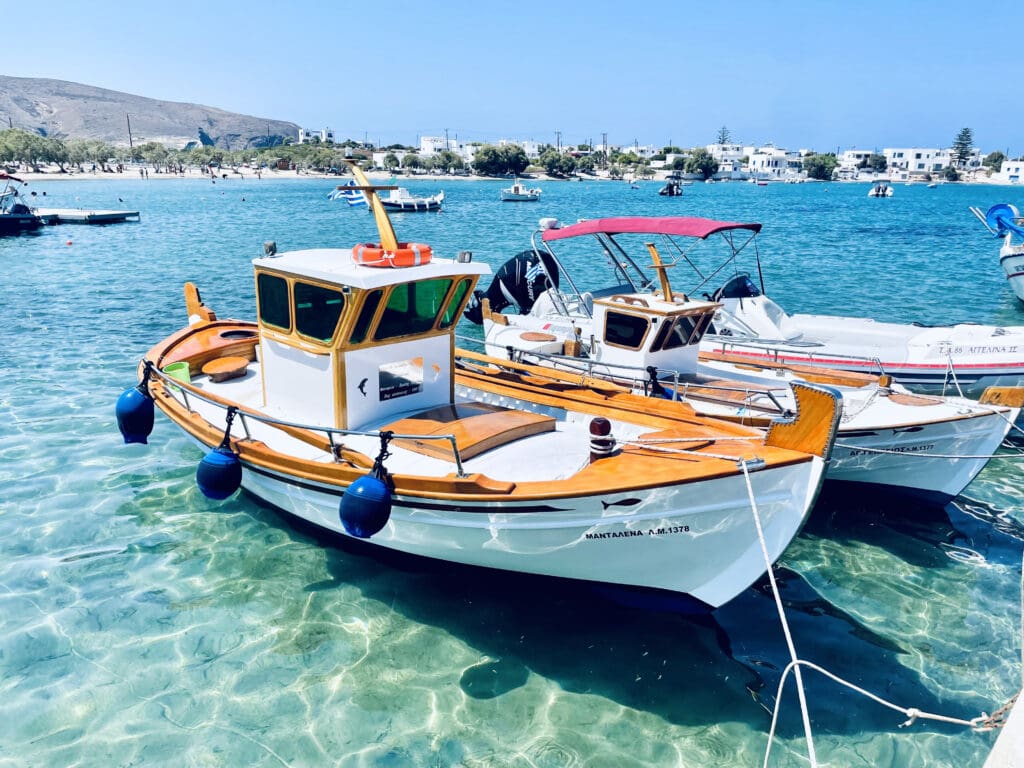
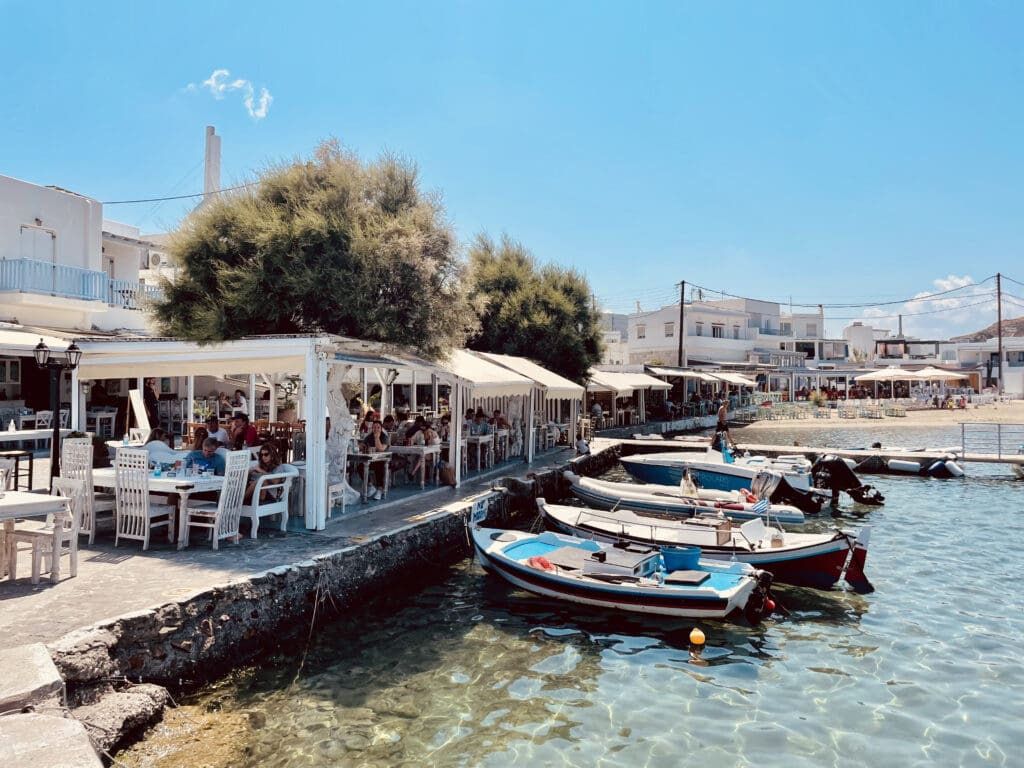
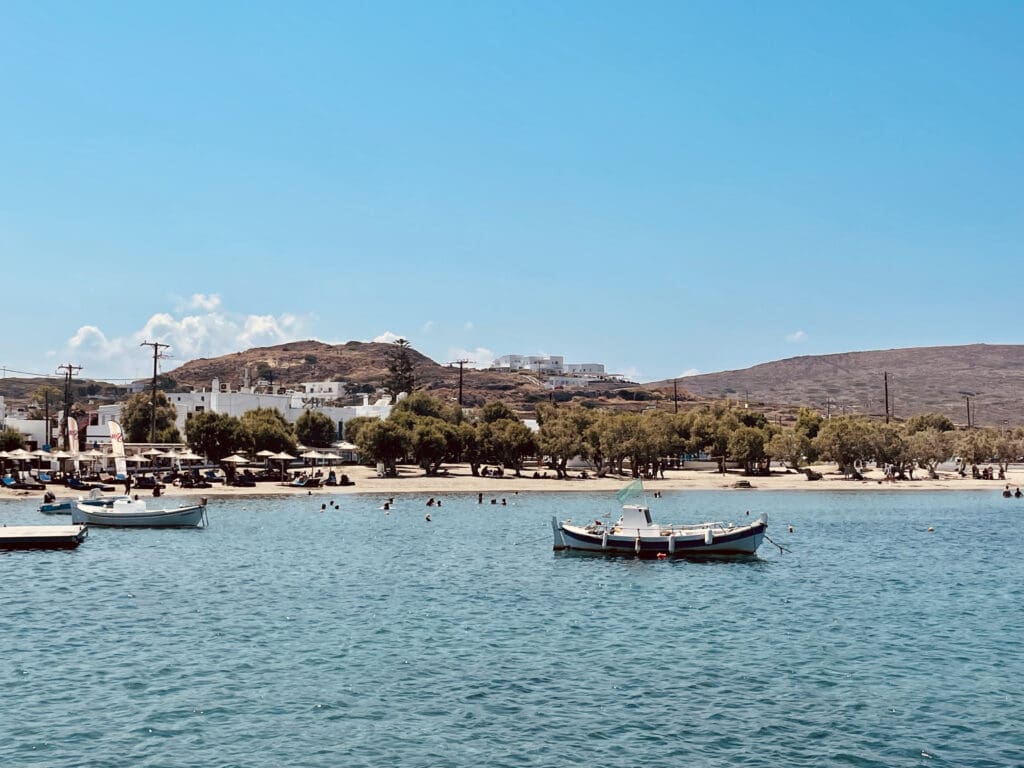
Pollonia offers a different side of Milos. This small seaside village is perfect for slowing down and enjoying a long lunch by the water, browsing local shops, or simply relaxing along the waterfront.
If your itinerary allows, it’s worth spending at least part of a day here.
The Cats of Milos
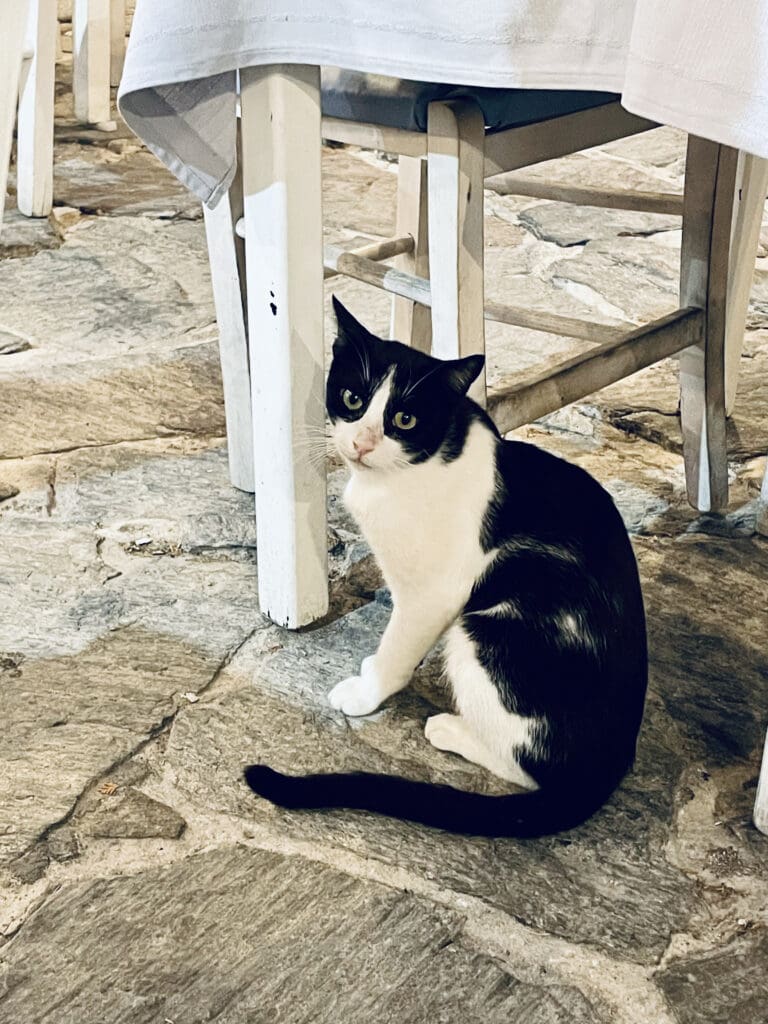
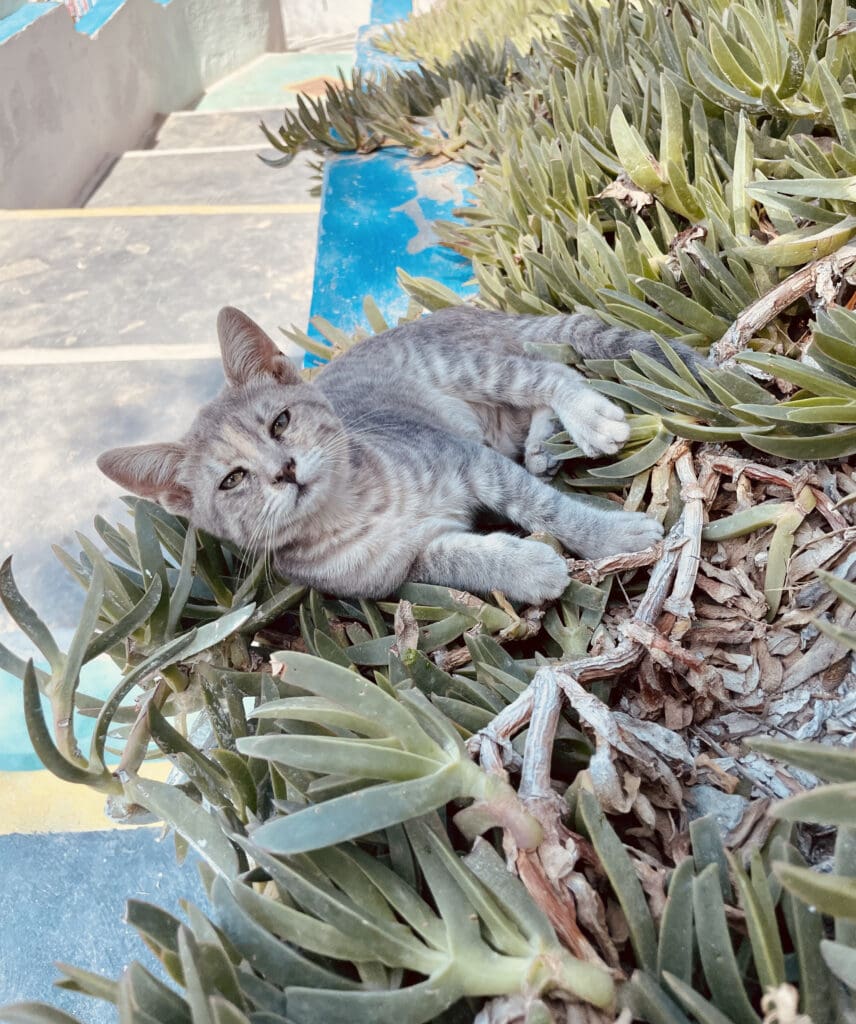

One thing I wasn’t expecting was the number of cats, they seemed to be everywhere.
Cats lounged outside tavernas waiting for scraps, napped on stone walls warmed by the Mediterranean sun, wandered through village squares, and appeared around every corner of the island.
As someone who enjoys photography, I quickly found myself taking nearly as many photos of cats as I did of beaches.
They became part of the character of Milos and added to the island’s relaxed and welcoming atmosphere.
Life in Trypiti
Choosing Trypiti as our base turned out to be one of my favorite decisions.
Unlike the busier port areas, Trypiti offered a quieter glimpse into daily life on the island. Whitewashed buildings lined narrow streets, local tavernas welcomed visitors each evening, and the views across the coastline were beautiful, especially as the day began to wind down.
After days spent exploring beaches and cruising along the coast, returning to a peaceful village each evening felt like the perfect balance.
Eating in Milos
One of the things I love most about traveling through Greece is that meals are never just about the food—they’re about slowing down, enjoying the scenery, and immersing yourself in the local culture. Milos was no exception.
Whether we were sitting at a waterfront taverna or enjoying dinner in one of the island’s villages, every meal felt unhurried. There was never a sense of being rushed. Instead, lunch often stretched into the afternoon, and dinner became the perfect way to end a day spent exploring beaches, fishing villages, and scenic viewpoints.
Since we stayed in Trypiti, one of our favorite discoveries was Glaronisia Restaurant, located just a short walk from our apartment. After a full day of sightseeing, it was wonderful to stroll over for dinner without having to get back in the car. The welcoming atmosphere, traditional Greek dishes, and beautiful sunset views made it the perfect place to relax each evening, and it quickly became one of our favorite restaurants on the island.

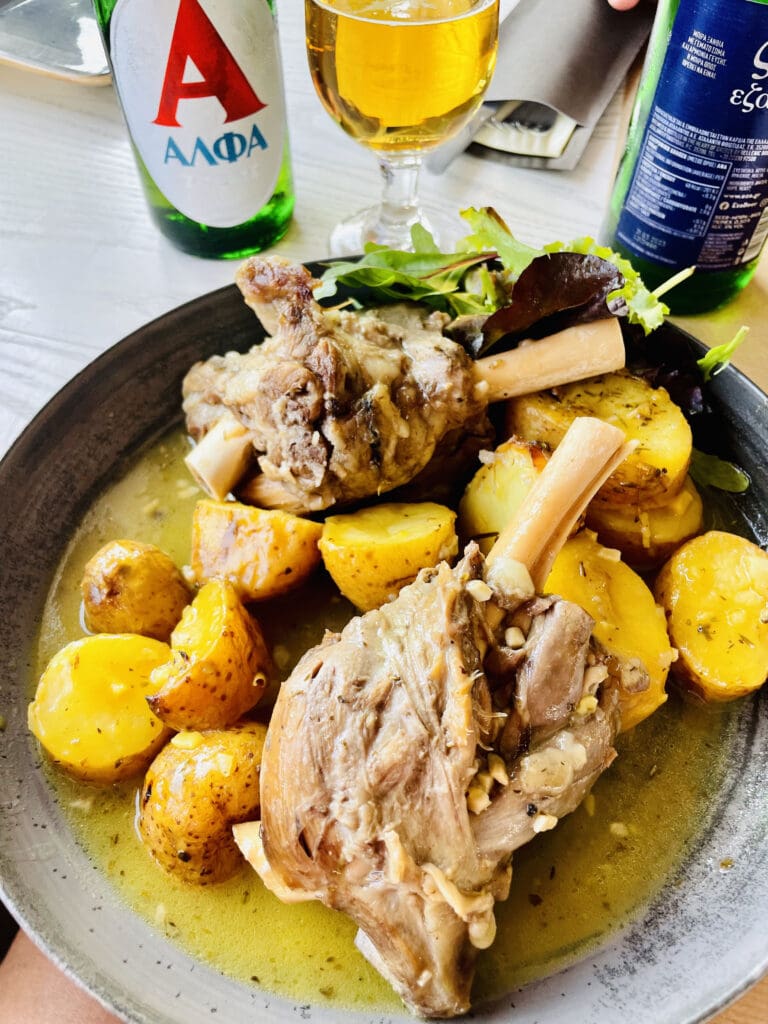
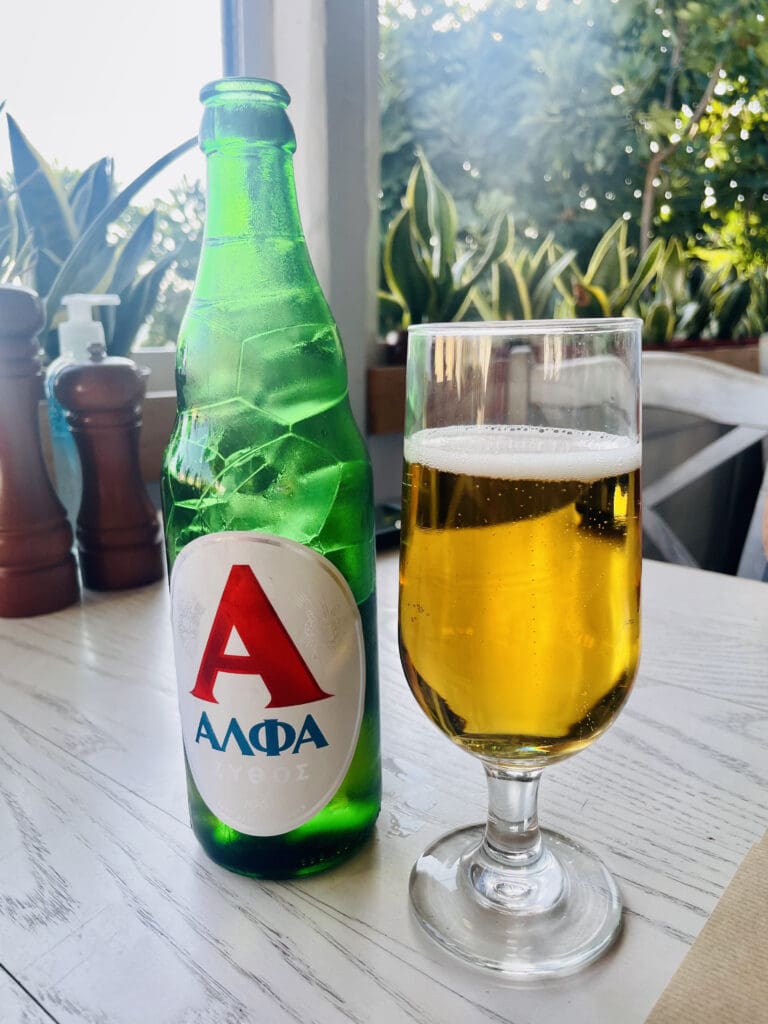
Another memorable meal was at Medusa Restaurant in the picturesque fishing village of Mandrakia. Sitting just steps from the water, enjoying fresh seafood while overlooking the colorful boat garages and crystal-clear harbor, perfectly captured everything we loved about Milos. It wasn’t just about the meal—it was about the experience.
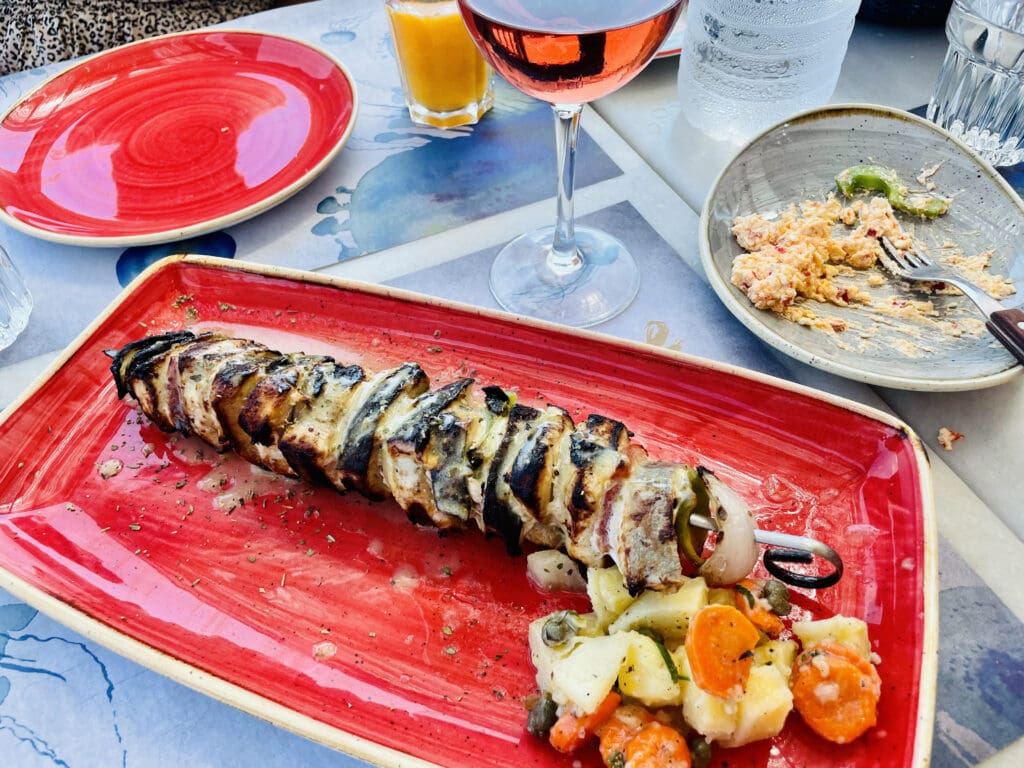
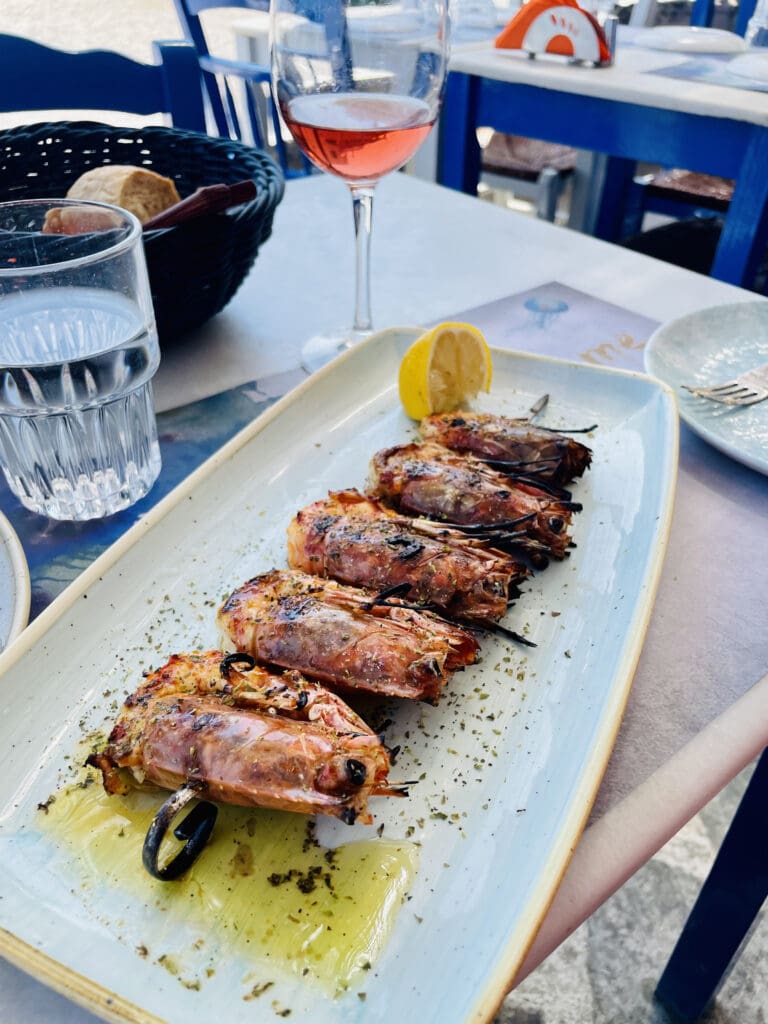
If you’re visiting Milos, be sure to try some of the island’s local specialties. Fresh seafood is found on nearly every menu, with grilled octopus, calamari, shrimp, and the catch of the day being popular choices. Milos is also known for pitarakia, delicious hand-made cheese pies unique to the island, and ladenia, a traditional flatbread topped with tomatoes, onions, and olive oil that has often been compared to a rustic Greek pizza.
Like much of Greece, dining in Milos is meant to be enjoyed slowly. Take your time, order something local, linger over your meal, and embrace the relaxed pace of island life. Some of our favorite memories weren’t made at famous attractions—they were made around the dinner table after another incredible day exploring the island.
How Many Days Do You Need in Milos?
When I planned our Greek island-hopping itinerary, I allocated three days to Milos. At the time, it seemed reasonable. After all, Milos is a relatively small island, and I assumed that would be enough time to see the highlights.
By the time I boarded the ferry to continue my journey, I had already changed my mind.
Three days allowed us to experience some of Milos’ most famous attractions, visit several beaches, explore charming villages, and take a boat cruise around the island. It was enough time to understand why so many travelers fall in love with Milos.
What it wasn’t enough time for was slowing down.
Milos is not a destination that rewards rushing from one attraction to another. Some of my favorite moments came from unplanned stops along coastal roads, lingering over lunch in a village taverna, or spending longer than expected at a beach simply because I wasn’t ready to leave.
If your goal is to see the highlights, three days is certainly doable.
However, if you want time to beach hop, enjoy a boat cruise, explore villages like Plaka, Pollonia, and Klima, relax over long dinners, and truly experience the slower pace of island life, I would recommend at least four to five nights.
For travelers combining Milos with other Greek islands, I would even suggest giving Milos more time than Santorini. While Santorini offers iconic views and famous landmarks, Milos is the kind of place that invites exploration. The longer you stay, the more rewarding it becomes.
Looking back on our own trip through Athens, Naxos, Santorini, and Milos, Milos was the island where I most wished I had added an extra day or two.
Things I Wish I Had Known Before Visiting Milos
- Rent a small car.
- Book the boat cruise early.
- Bring water shoes for rocky beaches.
- Parking may not be directly at your hotel.
- Three days goes by much faster than you think.
Final Thoughts
Milos may not have the worldwide fame of Santorini or the nightlife of Mykonos, but that’s exactly what makes it special.
It offers dramatic landscapes, incredible beaches, charming villages, unforgettable boat excursions, and a pace of life that encourages you to relax rather than rush.
Of all the islands we visited during our Greek adventure, Milos was the one I wished I had spent more time exploring.
And sometimes, that’s the best compliment a destination can receive.
Have you visited Milos, or is it on your Greek island wish list?
I’d love to hear about your favorite Greek islands in the comments below. And if you’re dreaming of island hopping through Greece, I can help you design an itinerary that goes beyond the typical tourist route and helps you discover places like Milos for yourself.


Be the first to comment